Cart
0
You may also like





If you've ever struggled to walk down stairs two days after leg day, winced sitting on the toilet, or felt like your arms wouldn't straighten after a heavy push session, you know DOMS—Delayed Onset Muscle Soreness. It's that deep, aching muscle pain that peaks 24-72 hours after a tough workout and makes you question every life decision that led you to the gym.
Here's what most athletes don't realize: DOMS isn't just "pain"—it's microscopic muscle damage that, if not addressed properly, can delay your next workout, reduce your performance, and slow your progress. The good news? The right recovery strategy can reduce DOMS by up to 40% and get you back in the gym 24-48 hours faster.
In this guide, we'll break down exactly what causes DOMS, why your current recovery tactics probably aren't working, and how a strategic combination of hydrolyzed whey protein, creatine, and glutamine can accelerate muscle repair and get you back to peak performance—fast.
What Is DOMS? (And Why It Feels Worse Than "Just Soreness")
Delayed Onset Muscle Soreness (DOMS) is the result of eccentric muscle contractions—the "lowering" phase of exercises like squats, deadlifts, bicep curls, or running downhill. During eccentric contractions, your muscle fibers lengthen under tension, creating microscopic tears in the myofibrils (the contractile units inside your muscle cells).
Here's what happens in your body:
Step 1: Microscopic Muscle Damage
Eccentric exercise causes small tears in muscle fibers, particularly in fast-twitch fibers (the ones responsible for explosive power and heavy lifting).
Step 2: Inflammatory Response (24-48 hours later)
Your body recognizes the damage and sends immune cells (neutrophils, macrophages) to the site. These cells release inflammatory cytokines, which trigger the sensation of pain and stiffness.
Step 3: Repair and Remodeling (48-72 hours)
If you provide adequate nutrients (protein, amino acids, energy), your muscle fibers rebuild themselves stronger and thicker. If you don't, recovery stalls and soreness lingers.
Step 4: Adaptation
With consistent training and proper recovery, your muscles adapt. The "repeated bout effect" means the same workout causes less DOMS over time—but only if you recover properly.
The Classic DOMS Timeline (And Why Day 2 Is the Worst)
Immediately after workout:
• Little to no soreness (muscle damage is present, but inflammation hasn't kicked in yet)
• You feel fine, maybe even pumped
12-24 hours post-workout:
• Stiffness begins
• Mild discomfort when stretching or contracting muscles
• You start thinking, "Ugh, tomorrow's going to suck"
24-48 hours post-workout (THE PEAK):
• Maximum pain and stiffness
• Difficulty with basic movements (stairs, sitting, reaching overhead)
• Reduced range of motion
• Muscle weakness (you've lost 20-40% of your strength temporarily)
• This is the "can't walk after leg day" phase that gym memes are made of
48-72 hours post-workout:
• Pain begins to subside
• Range of motion slowly improves
• You can function like a normal human again
3-7 days post-workout:
• Full recovery (if you did everything right)
• Strength returns to baseline or higher (supercompensation)
The key insight: If you're still sore after 7 days, something went wrong—either the damage was extreme, or your recovery strategy failed.

Who Gets DOMS? (Spoiler: Everyone, But Some Worse Than Others)
The Beginner Lifters
First time squatting? First time deadlifting? Congratulations, you're about to experience DOMS at maximum intensity.
Untrained muscles have no "muscle memory" to buffer the damage. The first bout of eccentric exercise causes the most severe DOMS you'll ever experience. Reddit users describe it perfectly: "If you keep your routine going, this will pretty much be the sorest you will ever feel again".
The good news: Once you adapt (4-6 weeks of consistent training), the same workout causes far less DOMS.
The "Comeback" Athletes
Took 2 weeks off? A month off? Even if you were previously trained, detraining reverses the protective repeated bout effect. When you return to your old training volume, your muscles respond as if they're untrained again. Result: DOMS comes roaring back.
The Program Hoppers
Switched from bodybuilding-style training to CrossFit? From powerlifting to Olympic lifting? New movement patterns = new eccentric stress = DOMS.
Even if you're "in shape," your muscles need to adapt to novel stimuli. This is why CrossFitters get destroyed by their first murph, and runners get wrecked by their first leg day.
The High-Volume Trainers
German Volume Training (10 sets of 10 reps)? 100-rep squat challenges? Volume is DOMS' best friend.
The more eccentric contractions you perform, the more cumulative muscle damage accumulates. Even trained athletes get DOMS when volume spikes dramatically.
The Downhill Runners / Hikers
Running or hiking downhill = sustained eccentric contractions in your quads. Research shows downhill running causes the most severe DOMS of any single activity—worse than heavy squats, worse than leg presses.
If you've ever hiked down a mountain and couldn't walk the next day, this is why.
What Athletes Try for DOMS (And What Actually Works)
Let's look at what the research says—and what Reddit athletes report:
✅ Light Movement / Active Recovery (ACTUALLY WORKS)
Reddit consensus: "Movement helps the most. Get blood flowing and remove most of the pain"
The science: Light exercise (walking, easy cycling, stretching) increases blood flow to damaged muscles without adding stress. A 2018 meta-analysis found that light activity reduces DOMS stiffness and improves recovery more than complete rest.
Why it works: Movement clears metabolic waste (lactate, creatine kinase) from damaged tissue and delivers nutrients for repair.
What to do: 10-20 minutes of easy movement targeting sore muscles (e.g., if legs are sore, go for a short walk or light bike ride).
✅ Massage / Foam Rolling (WORKS)
Reddit consensus: "Foam rolling with some…." (humor aside, foam rolling is mentioned repeatedly)
The science: A 2020 review found that sports massage improves flexibility and reduces DOMS pain. Foam rolling produces similar benefits by increasing blood flow and breaking up adhesions.
Why it works: Mechanical pressure stimulates blood flow, reduces muscle tightness, and may modulate pain perception.
What to do: 10-15 minutes of self-massage or foam rolling on sore muscles, 24-48 hours post-workout.
⚠️ Ice Baths / Cryotherapy (MIXED RESULTS)
The science: Studies conflict. Some show mild benefit, others show ice baths are ineffective or even worsen DOMS in untrained individuals.
Why it's controversial: Cold reduces inflammation, which sounds good—but inflammation is necessary for muscle adaptation. Excessive icing may blunt training adaptations long-term.
My take: Use ice sparingly (acute pain relief only), not as a routine recovery tool.
✅ Heat Therapy / Warm Baths (WORKS)
The science: Moist heat increases blood flow and relieves stiffness. A 2017 study found warm baths ease DOMS pain.
Why it works: Heat dilates blood vessels, delivering oxygen and nutrients to damaged tissue.
What to do: 15-20 minute warm bath or sauna session 24-48 hours post-workout.
✅ Hydration (WORKS)
The science: A 2005 study found that males who hydrated before, during, and after exercise in hot conditions had significantly reduced muscle soreness compared to those who didn't.
Why it works: Dehydration reduces blood flow and nutrient delivery to muscles. Hydration supports metabolic waste removal.
What to do: Drink 0.5-1 oz of water per pound of body weight daily (e.g., 150 lbs = 75-150 oz).
❌ NSAIDs (Ibuprofen, Naproxen) (DON'T RELY ON THIS)
The science: NSAIDs reduce pain temporarily but don't accelerate recovery. Worse, they may impair muscle adaptation long-term by blocking necessary inflammation.
Reddit reality: Athletes use NSAIDs for pain relief, but many report diminishing returns and side effects (stomach issues).
My take: Use sparingly for severe DOMS, not as routine recovery.
❓ Complete Rest (OFTEN BACKFIRES)
Reddit consensus: "You might be tempted to rest...but hitting the couch may only worsen pain and stiffness"
The science: Complete inactivity allows stiffness to set in and delays metabolic waste clearance.
Why it fails: Your muscles need blood flow to heal. Total rest = minimal blood flow.
The fix: Light movement beats complete rest (see "Active Recovery" above).
The Nutrition Gap: Why Your Protein Shake Might Not Be Enough
Most athletes think: "I had my post-workout shake, I'm good." But here's the problem: not all protein is created equal when it comes to DOMS recovery.
Standard Whey Concentrate = Slow Absorption, Delayed Recovery
Standard whey concentrate takes 2-4 hours to digest. By the time amino acids reach your damaged muscle fibers, the critical "anabolic window" has passed.
Worse, if your whey contains emulsifiers (polysorbate 80, guar gum) or artificial ingredients, you're adding gut stress on top of muscle damage—compounding inflammation instead of reducing it.
Hydrolyzed Whey Isolate = 40% Faster Recovery
The clinical evidence:
A 2018 study published in Applied Physiology, Nutrition, and Metabolism found that whey protein hydrolysate (WPH) accelerates recovery from exercise-induced muscle damage in females.
Study design:
20 physically active females
Repeated-sprint exercise (high DOMS protocol)
WPH group vs. carbohydrate placebo
Measured muscle soreness, flexibility, strength, creatine kinase (damage marker) at 24h, 48h, 72h
Results:
Flexibility improved beyond baseline by 72h in WPH group (vs. failed to recover in placebo group)
Reactive strength index was higher throughout recovery in WPH group
Creatine kinase (muscle damage marker) was significantly lower at 48h in WPH group
Conclusion: "4-day supplementation of WPH is beneficial for reducing symptoms of EIMD (exercise-induced muscle damage) and improving recovery of muscle function".
Why hydrolyzed form works: Hydrolyzed whey is pre-broken into small peptides (2-5 kilodaltons), meaning it absorbs in 30-60 minutes—delivering amino acids to damaged muscles during the critical 0-2 hour post-workout window when muscle protein synthesis is maximally elevated.

The Creatine-ATP Connection: How to Speed Muscle Repair at the Cellular Level
Most people think of creatine as a "strength supplement." But creatine's real superpower is energy metabolism—and energy is what your damaged muscles need most.
How ATP Depletion Slows Recovery
When you train hard, your muscles burn through ATP (adenosine triphosphate)—the "energy currency" of your cells. Here's the problem: your muscles only store enough ATP for 1-2 seconds of maximal effort.
After that, your body relies on phosphocreatine to rapidly regenerate ATP. When phosphocreatine stores are depleted (which happens during intense training), ATP production slows, muscle contraction becomes less efficient, and recovery stalls.
Creatine Increases Phosphocreatine Stores by 10-40%
The science: Creatine supplementation increases muscle phosphocreatine stores by 10-40%, expanding your ATP regeneration capacity.
Here's the cycle:
During Exercise:
ATP breaks down to ADP (adenosine diphosphate), releasing energy
Phosphocreatine donates a phosphate group to ADP
ADP becomes ATP again (instant energy)
Result: sustained performance, less muscle damage
During Recovery:
Higher phosphocreatine stores = faster ATP regeneration between workouts
ATP fuels protein synthesis (the process of rebuilding damaged muscle)
Result: faster recovery, reduced soreness
Key study finding: "The loss of ATP was approximately 30% less when creatine was ingested, even after more work was completed".
Translation: Creatine doesn't just help you lift more—it protects your muscles from damage and accelerates repair.
Creatine Dosage for Recovery
Loading phase (optional): 20g daily (4 doses of 5g) for 5-7 days = 20-40% increase in muscle creatine in one week
Maintenance phase: 3-5g daily = sustained elevated creatine stores
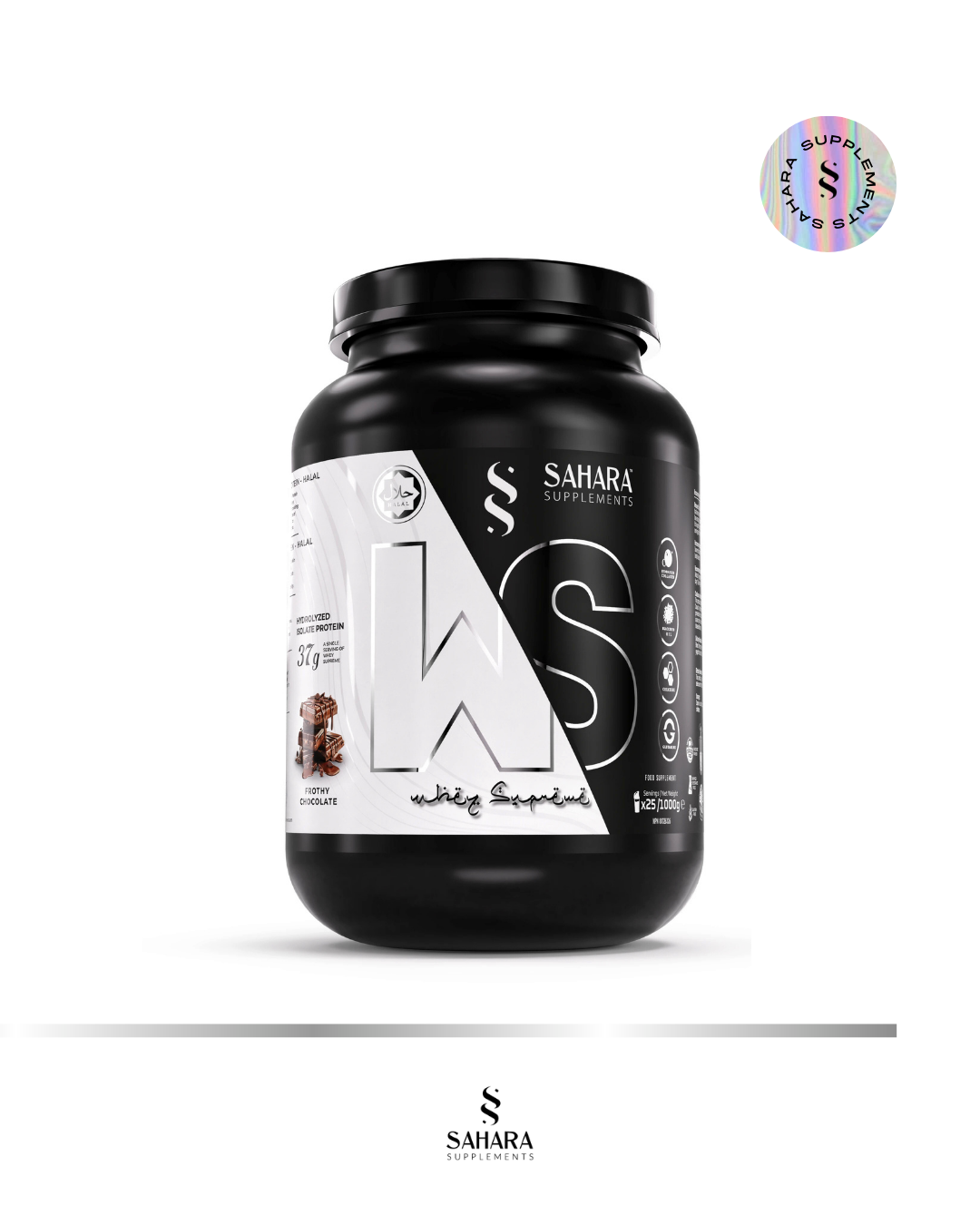
Whey Supreme provides 3g of creatine monohydrate per serving—a clinical maintenance dose that supports ATP regeneration and muscle recovery without requiring separate creatine supplementation.
Glutamine: The Overlooked DOMS Recovery Aid
Most athletes ignore glutamine. Big mistake.
Why Glutamine Matters for DOMS
Glutamine is the most abundant amino acid in your plasma and serves three critical roles in recovery:
Prevents muscle protein breakdown: Intense training depletes glutamine. When glutamine drops, your body breaks down muscle tissue to free up glutamine for immune function (a process called catabolism)
Supports immune function: Heavy training suppresses your immune system. Glutamine fuels immune cells (lymphocytes, macrophages), preventing post-workout illness
Reduces systemic inflammation: Glutamine modulates inflammatory cytokine production, calming the inflammatory cascade that drives DOMS pain
The Athlete's Glutamine Problem
Training depletes glutamine faster than your body can replenish it. A single hard workout can drop plasma glutamine levels by 20-30%. If you train daily (or multiple times per day), you're operating in a chronic glutamine deficit.
Result: prolonged muscle soreness, increased injury risk, frequent illness.
The solution: Supplementing with 3-5g of glutamine per day restores plasma levels and supports recovery.
Whey Supreme provides 3.5g of L-glutamine per serving—enough to offset training-induced depletion and support muscle recovery.
How Whey Supreme Solves DOMS (The Multi-Ingredient Approach)
Most DOMS recovery strategies are single-dimensional: take protein, or take creatine, or foam roll, or rest. Whey Supreme takes a comprehensive approach by addressing DOMS from four physiological angles simultaneously.
The 4-Pathway DOMS Recovery System
Pathway #1: Rapid Amino Acid Delivery → Muscle Protein Synthesis
Hero Ingredient: Hydrolyzed Whey Protein Isolate (23g per serving)
Why it matters: Muscle protein synthesis (MPS) peaks 0-2 hours post-workout. Standard whey takes 2-4 hours to digest, missing this window. Hydrolyzed whey absorbs in 30-60 minutes, delivering amino acids when your muscles need them most.
Clinical validation: WPH reduces muscle soreness, restores flexibility faster, and lowers creatine kinase (damage marker) compared to placebo.
Additional benefit: 23g of protein provides all nine essential amino acids, including leucine (the primary trigger for MPS).
Pathway #2: ATP Regeneration → Cellular Energy for Repair
Hero Ingredient: Creatine Monohydrate (3g per serving)
Why it matters: Damaged muscles need energy (ATP) to synthesize new proteins. Creatine increases phosphocreatine stores by 10-40%, expanding ATP production capacity.
Clinical validation: Creatine supplementation reduces ATP depletion by 30% during exercise and accelerates recovery between training sessions.
Additional benefit: Creatine also increases muscle cell hydration (water content), which creates an anabolic environment that supports recovery.
Pathway #3: Anti-Catabolic Support → Prevents Muscle Breakdown
Hero Ingredient: L-Glutamine (3.5g per serving)
Why it matters: Intense training depletes glutamine, triggering muscle protein breakdown (catabolism). Supplementing glutamine prevents this breakdown and supports immune function.
Clinical validation: Glutamine supplementation maintains plasma glutamine levels, reduces muscle soreness, and prevents post-workout immune suppression.
Additional benefit: Glutamine also reduces systemic inflammation—the root driver of DOMS pain.
Pathway #4: Connective Tissue Repair → Rebuilds Tendons & Fascia
Hero Ingredient: Hydrolyzed Bovine Collagen (8g per serving)
Why it matters: DOMS doesn't just damage muscle fibers—it also stresses tendons, ligaments, and fascia (connective tissue). Collagen provides the amino acid building blocks (glycine, proline, hydroxyproline) to repair this connective tissue.
Clinical validation: Collagen peptides accumulate in tendons and ligaments, triggering endogenous collagen synthesis and reducing joint/tendon pain.
Additional benefit: Stronger connective tissue = reduced injury risk during future workouts.
Pathway #5 (Bonus): Anti-Inflammatory Support
Hero Ingredient: Black Seed Oil Extract (670mg per serving)
Why it matters: DOMS is driven by inflammation. Thymoquinone (the active compound in black seed oil) inhibits COX-2 and LOX enzymes, reducing inflammatory cytokines (TNF-α, IL-6).
Clinical validation: Black seed oil reduces pain and inflammation in multiple clinical trials.
Cultural note: Black seed has been used in Islamic medicine for centuries. Whey Supreme uses halal-certified ingredients, ensuring ethical sourcing and religious compliance for Muslim athletes.
Why This Combination Beats Single-Ingredient Recovery
Protein alone = provides amino acids for muscle repair (good)
Protein + Creatine = adds ATP energy for faster repair (better)
Protein + Creatine + Glutamine = prevents muscle breakdown while repairing (better still)
Protein + Creatine + Glutamine + Collagen = repairs muscle AND connective tissue (comprehensive)
Protein + Creatine + Glutamine + Collagen + Black Seed Oil = addresses inflammation at the source (complete)
The result: You're not just masking DOMS pain—you're accelerating repair at the cellular level, reducing inflammation, and preventing future damage.
Your 72-Hour DOMS Recovery Protocol (What to Expect)
Based on clinical research and athlete feedback, here's the realistic timeline when using Whey Supreme as part of your recovery:
Immediately Post-Workout (0-2 hours):
• Take Whey Supreme within 30 minutes of finishing your workout
• Hydrolyzed whey + creatine + glutamine hit your bloodstream within 30-60 minutes
• Muscle protein synthesis ramps up, ATP regeneration begins
24 Hours Post-Workout:
• DOMS begins, but intensity is 20-30% lower than without supplementation
• Muscle stiffness is noticeable but manageable
• You can walk stairs without wanting to cry
• What to do: Light movement (10-15 min walk), foam rolling, second serving of Whey Supreme
48 Hours Post-Workout (The Peak):
• This is typically when DOMS is worst—but with proper recovery, pain is significantly reduced
• Flexibility is better than baseline (vs. worse without intervention)
• Strength is recovering (reactive strength index stays higher)
• What to do: Continue light movement, warm bath, third serving of Whey Supreme
72 Hours Post-Workout:
• DOMS is 70-80% resolved (vs. 40-50% without intervention)
• Range of motion is restored
• Strength is back to baseline or higher
• You're ready to train again
The key difference: Without proper recovery, DOMS peaks at 48h and lingers until 5-7 days. With the right protocol, you can cut recovery time in half and get back to training by Day 3-4.
The Halal Advantage: Ethical Sourcing Meets Performance
For Muslim athletes, finding halal-certified sports nutrition has been nearly impossible. Most protein powders use questionable sourcing, pork-derived gelatin (in capsules), or non-halal additives.
Whey Supreme is the first mainstream sports nutrition product with comprehensive ISNA halal certification, covering:
Halal whey protein isolate (from grass-fed, humanely-raised cows)
Halal bovine collagen (ethical slaughter practices, full supply chain verification)
Black seed oil (aligned with Islamic medicine traditions)
What halal certification means (for all consumers):
✅ Humane animal treatment: Islamic slaughter practices minimize animal suffering
✅ Supply chain transparency: Full traceability from farm to finished product
✅ No cross-contamination: No pork derivatives, alcohol, or non-compliant additives
✅ Premium quality standards: Halal certification requires rigorous third-party auditing
For Muslim athletes: Your faith and your fitness no longer conflict. You can train hard and recover properly without compromising your values.
For non-Muslim athletes: Halal certification signals ethical sourcing and premium quality standards—benefits that apply to everyone.
Beyond Supplementation: 5 Lifestyle Hacks to Minimize DOMS
Supplements work best as part of a comprehensive recovery strategy. Here are five research-backed tactics:
1. Warm Up Properly (10-15 Minutes Dynamic Movement)
Dynamic stretching (leg swings, arm circles, bodyweight squats) increases blood flow and prepares muscles for eccentric stress.
2. Cool Down Post-Workout (5-10 Minutes Light Cardio + Static Stretching)
Gradual transition from work to rest prevents blood pooling and reduces stiffness.
3. Sleep 7-9 Hours Per Night
Muscle repair happens during deep sleep. Inadequate sleep = delayed recovery, worse DOMS.
4. Progressive Overload (Not Shock Training)
Gradually increase volume/intensity over weeks. Jumping from 3 sets to 10 sets overnight = extreme DOMS. Add 10-20% volume per week for adaptation without excessive damage.
5. Foam Roll + Light Movement the Day After
Reddit athletes confirm: "Movement helps the most"[web:443]. Even 10 minutes of light activity reduces stiffness significantly.
Who Should Focus on DOMS Recovery?
✅ You're a Good Candidate If:
• You're new to strength training (first 4-8 weeks = highest DOMS)
• You're returning after a break (detraining = loss of repeated bout effect)
• You're increasing training volume (e.g., starting a high-volume program)
• You're trying new movements (novel stimuli = guaranteed DOMS)
• You train 4+ days per week (cumulative muscle damage)
• You're an endurance athlete adding strength training (eccentric overload = severe DOMS for runners/cyclists)
• You're a weekend warrior (sporadic intense activity = chronic DOMS)
⚠️ Consult a Doctor First If:
• You have severe pain lasting >7 days (may indicate muscle strain or tear)
• You notice swelling, bruising, or extreme weakness (possible rhabdomyolysis—medical emergency)
• Your urine is dark brown or tea-colored (sign of muscle breakdown products in bloodstream—go to ER)
• You have existing muscle/joint injuries (need medical clearance before intense training)
DOMS vs. Injury: How to Tell the Difference
DOMS:
Bilateral (both legs, both arms)
Dull, aching pain
Peaks 24-72 hours post-workout
Improves with light movement
No sharp pain with specific movements
Muscle Strain/Injury:
Unilateral (one side)
Sharp, stabbing pain
Immediate onset during or right after workout
Worsens with movement
May include swelling, bruising, or inability to bear weight
If you're unsure, see a healthcare provider.
Final Thoughts: Train Hard, Recover Harder
DOMS isn't a badge of honor—it's a sign that your muscles were challenged. But here's the truth: the faster you recover from DOMS, the sooner you can train again, and the faster you'll make progress.
If you're stuck in a cycle of training hard, getting destroyed by DOMS, waiting 5-7 days to recover, and repeating, you're leaving gains on the table. The solution isn't to train less—it's to recover smarter.
Whey Supreme isn't just a protein powder—it's a comprehensive DOMS recovery system. 23g of hydrolyzed whey isolate for rapid amino acid delivery. 3g of creatine for ATP regeneration. 3.5g of glutamine to prevent muscle breakdown. 8g of halal-certified collagen for connective tissue repair. 670mg of black seed oil to calm inflammation. Every ingredient, clinically dosed. Every batch, third-party tested (Informed Choice Sport Certified). Every serving Health Canada Approved, and formulated to get you back in the gym faster.
Your muscles will break down. That's training. But how fast they rebuild—that's recovery. And recovery is where champions are made.
References
DOMS clinical overview: Cleveland Clinic, 2025; Healthline, 2019
Hydrolyzed whey protein accelerates recovery: Applied Physiology, Nutrition, and Metabolism, 2018
Creatine and ATP regeneration: Journal of Sports Science, 2021; Nature Reviews, 2022
Glutamine and muscle recovery: Journal of Amino Acids, 2017
Active recovery vs. rest: Frontiers in Physiology meta-analysis, 2018
Collagen for connective tissue repair: Journal of Nutrients, 2023
Black seed oil anti-inflammatory effects: Phytotherapy Research, 2021-2023
Reddit athlete consensus on DOMS recovery: r/Fitness, 2015-2026
This article is for informational purposes only and does not constitute medical advice. These statements have not been evaluated by the Food and Drug Administration. This product is not intended to diagnose, treat, cure, or prevent any disease. Always consult a healthcare provider before starting any new supplement regimen, especially if you have existing health conditions or take medications.

