Cart
0
You may also like





If you've ever downed a protein shake and spent the next two hours feeling like you swallowed a balloon, you're not alone. Protein powder bloating is one of the most common—and most frustrating—side effects reported by athletes and fitness enthusiasts. You're trying to support your training, but instead, you're stuck with gas, abdominal discomfort, and that uncomfortable "heavy stomach" feeling that makes you regret even opening the shaker bottle.
Here's what most people don't realize: the bloating isn't from the protein itself—it's from everything else in your protein powder. Emulsifiers that damage your gut lining. Artificial sweeteners that ferment in your colon. Lactose that your body can't digest. And processing methods that leave intact proteins sitting in your stomach for hours.
In this guide, we'll break down exactly why protein powder causes bloating, which ingredients are the worst offenders, and how switching to hydrolyzed whey isolate with zero additives can eliminate digestive discomfort entirely—so you can actually benefit from your post-workout nutrition instead of suffering through it.
Why Does Protein Powder Make You Bloated? (The 5 Primary Culprits)
Whey protein comes from milk. Even after processing, many whey protein powders—especially whey concentrate—still contain lactose, the natural sugar found in dairy.
Here's the problem: about 68% of the global population has some degree of lactose malabsorption. If your body doesn't produce enough lactase (the enzyme that breaks down lactose), the undigested lactose travels to your colon, where gut bacteria ferment it.
The result:
Gas production (methane, hydrogen, CO2)
Bloating and abdominal swelling
Cramping and discomfort
Diarrhea (in severe cases)
Rumbling stomach
Clue you have lactose issues: If milk, ice cream, or cheese also bother your stomach, lactose is likely driving your protein powder bloating.
Not all whey protein is created equal when it comes to lactose content:
Whey Concentrate = 3-4% lactose (high) → most bloating
Whey Isolate = <1% lactose (low) → less bloating
Hydrolyzed Whey = <0.5% lactose (minimal) + pre-digested → zero bloating
If you're using whey concentrate and experiencing bloating, switching to hydrolyzed whey isolate alone can eliminate 70-80% of your symptoms.
Most protein powders contain emulsifiers—additives that improve mixability, texture, and shelf life. Common ones include:
Soy lecithin
Sunflower lecithin
Carrageenan
Xanthan gum
Polysorbate-80 (P80)
Carboxymethylcellulose (CMC)
Sounds harmless, right? Wrong.
The research is damning:
A 2017 study found that emulsifiers (specifically CMC and polysorbate-80) directly altered gut microbiota composition, decreased gut bacteria diversity, and disrupted the mucus gut barrier—causing increased intestinal permeability ("leaky gut").
What this means for you:
Bacteria and toxins leak through your gut lining
Chronic low-grade inflammation develops
Bloating, gas, and abdominal discomfort become chronic
Risk of inflammatory bowel diseases increases
Translation: Every time you drink a protein shake with emulsifiers, you're damaging your gut barrier. Over weeks and months, this compounds into chronic digestive issues—not just temporary bloating.
To keep calories low while maintaining sweetness, most protein powders use:
Sucralose
Aspartame
Sugar alcohols: sorbitol, xylitol, erythritol, maltitol
The problem with sugar alcohols:
Sugar alcohols are poorly absorbed in the small intestine. When they reach your colon, gut bacteria ferment them, producing gas.
Who's most vulnerable: People with IBS or sensitive digestion. For these individuals, sugar alcohols act as FODMAP triggers, causing severe bloating and discomfort.
Even if your protein powder has zero lactose, zero emulsifiers, and zero artificial sweeteners, you might still bloat if you're using standard (non-hydrolyzed) whey.
The digestion timeline:
Standard whey concentrate: 2-4 hours to digest
Whey isolate: 1.5-2 hours to digest
Hydrolyzed whey: 30-60 minutes to digest
Hydrolyzed whey solves this: Through enzymatic hydrolysis, the protein is pre-broken into small peptides—essentially "pre-digested." This allows for rapid absorption with minimal digestive stress.
Clinical validation: A randomized controlled trial published in Nutrients found that hydrolyzed dairy protein significantly reduced bloating, gas, and heartburn in people with functional gastrointestinal disorders.
Sometimes the issue isn't what you're drinking—it's how.
What happens when you chug a protein shake:
You swallow excess air (aerophagia)
Large protein boluses slow gastric emptying
High protein intake pulls water into the intestines
Rapid consumption overwhelms digestive enzymes
The fix: Sip your shake over 10-20 minutes instead of chugging it in 30 seconds. Let the foam settle before drinking (foam = trapped air).

If you have IBS (Irritable Bowel Syndrome), protein powder bloating is often 3X worse.
Why? Because many protein powder ingredients act as FODMAP triggers:
Lactose = high FODMAP
Sugar alcohols = high FODMAP
Inulin/chicory root (added fiber) = high FODMAP
If you have IBS, standard protein powders are making your symptoms worse—not better.
The solution: Switch to hydrolyzed whey isolate with zero additives. No lactose. No sugar alcohols. No synthetic emulsifiers. No FODMAPs.
The hope: Plant proteins (pea, soy, rice) don't contain lactose, so they should eliminate bloating.
The reality: Plant proteins come with their own bloating issues:
Pea protein = high in fiber and oligosaccharides (fermentable carbs) → gas
Soy protein = phytoestrogens + processing additives → digestive issues for some
Rice protein = often low quality, requires additives for texture
Why it works: Whey isolate contains essentially no lactose (vs. 3-4% in concentrate), dramatically reducing lactose-driven bloating.
The catch: Isolate is only 50% of the solution. If your isolate still contains synthetic emulsifiers, sugar alcohols, or requires 2+ hours to digest, you'll still experience bloating—just less severe.
Why it's superior:
Pre-digested: Absorbs in 30-60 minutes (vs. 2-4 hours for standard whey)
Lactose-Free: Essentially no lactose content
No digestive enzyme load: Your stomach doesn't have to work hard to break it down
Clinical validation: Reduces bloating, gas, and heartburn in people with digestive sensitivities
Translation: Faster absorption = less time sitting in your stomach = zero bloating.
The limitation: Enzymes are a band-aid. They don't address synthetic emulsifiers, sugar alcohols, or poor-quality protein. Better to switch to a cleaner protein powder than rely on enzymes forever.
Why it backfires: If you're lactose intolerant (even mildly), adding milk to your protein shake doubles the lactose load.
The fix: Mix with water, almond milk, oat milk, or lactose-free milk.
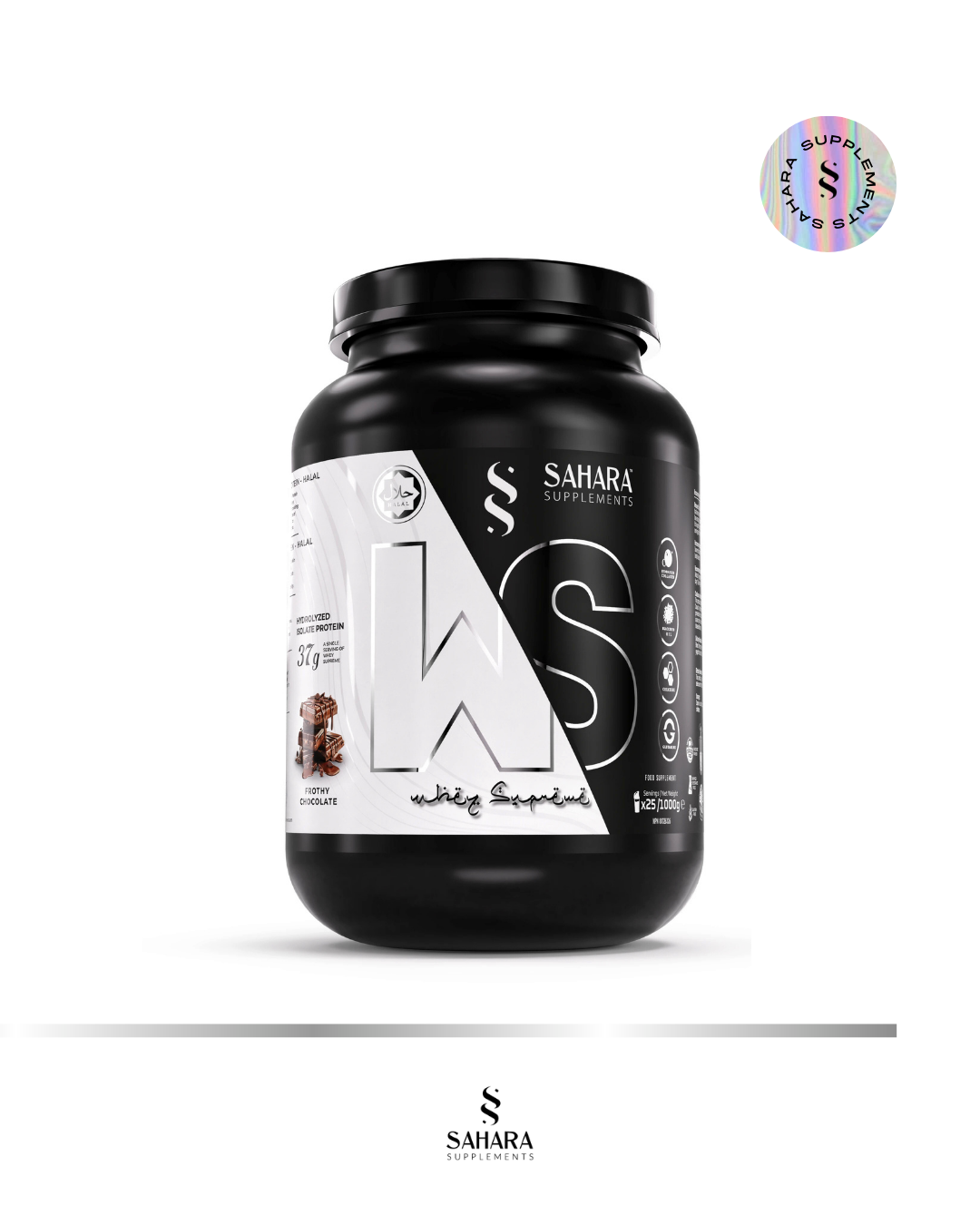
Most protein powders try to solve bloating by removing ONE problem ingredient (e.g., reducing lactose). Whey Supreme takes a comprehensive approach by eliminating ALL FIVE bloating triggers simultaneously.
Why it matters: Hydrolyzed whey is pre-broken into small peptides (2-5 kilodaltons)—essentially "pre-digested" before it even reaches your stomach.
How it eliminates bloating:
Absorbs in 30-60 minutes (vs. 2-4 hours for standard whey)
No prolonged stomach "fullness" or heaviness
Minimal fermentation in the colon (protein is absorbed before it gets there)
Reduces risk of digestive enzyme overwhelm
Clinical evidence: Hydrolyzed dairy protein significantly reduces bloating, gas, and heartburn in people with functional GI disorders.
Whey Supreme's advantage: By using hydrolyzed whey isolate, lactose content is essentially 0%—well below the threshold that triggers symptoms in most lactose-sensitive individuals.
Why it matters: Synthetic emulsifiers (carrageenan, xanthan gum, polysorbate-80, CMC) directly damage your gut microbiota, causing dysbiosis, leaky gut, and chronic inflammation.
Whey Supreme's approach: Zero synthetic emulsifiers. And you still don't need to shake your bottle more to fully mix the powder. No trade-off while avoiding gut damage and chronic bloating.
Whey Supreme's approach: No sugar alcohols. Just clean protein.
Whey Supreme's solution: 3.5g of L-glutamine per serving—the primary fuel source for your intestinal cells.
How glutamine helps:
Heals and maintains intestinal barrier integrity (reverses leaky gut)
Strengthens tight junctions between intestinal cells (prevents bloating-causing permeability)
Reduces systemic inflammation
Translation: While other protein powders damage your gut, Whey Supreme actively heals it.

Based on clinical research and customer feedback, here's the realistic timeline when switching to Whey Supreme:
Day 1-2: Immediate Digestive Relief
• First shake: You'll notice no "heavy stomach" feeling within 1-2 hours
• Hydrolyzed whey absorbs quickly—no prolonged fullness
• Zero gas or cramping (assuming you're not severely lactose intolerant)
Day 3-4: Gut Inflammation Begins to Decrease
• Your gut lining starts healing (thanks to zero synthetic emulsifiers + glutamine support)
• Bloating after meals (not just shakes) may improve as gut barrier strengthens
• You might notice: easier digestion overall, less food sitting heavy
Day 5-7: Consistent Bloat-Free Experience
• No more post-shake bloating—it becomes your new normal
• Gut microbiota begins rebalancing (beneficial bacteria increase without emulsifier disruption)
• Energy improves (less inflammation = better nutrient absorption)
Week 2-4: Full Gut Healing
• Intestinal permeability fully restored (if it was compromised)
• Chronic bloating (from all sources, not just protein) may resolve
• You realize: the problem was never "protein intolerance"—it was the junk in your old protein powder
The key difference: Most people think they're "protein intolerant." In reality, they're synthetic emulsifier-intolerant, sugar-alcohol-intolerant, or lactose-intolerant—and they've been consuming all three in their protein powder for years.
For Muslim athletes, finding halal-certified protein powder has been nearly impossible. Most whey proteins use questionable sourcing, non-halal processing, or contain additives derived from non-compliant sources.
Whey Supreme is ISNA halal-certified, covering:
Halal hydrolyzed whey isolate + collagen (from grass-fed, humanely-raised cows)
Ethical slaughter practices (minimal animal suffering, per Islamic law)
Supply chain transparency (full traceability from farm to finished product)
No cross-contamination (no pork derivatives, alcohol, or non-compliant additives)
Even the cleanest protein powder works best as part of a comprehensive digestive health strategy:
1. Sip, Don't Chug (10-20 Minutes Per Shake)
Rapid consumption = air swallowing + enzyme overwhelm. Slow sipping = better digestion.
2. Let the Foam Settle Before Drinking
Foam = trapped air. Drinking foamy shakes = swallowing gas = bloating.
3. Mix with Water or Lactose-Free Alternatives
Avoid mixing with regular milk if you're even mildly lactose sensitive.
4. Take It Post-Workout, Not on an Empty Stomach (If You're Sensitive)
Some people tolerate protein better after eating solid food first. Experiment to find what works for you.
5. Stay Hydrated (0.5-1 oz per Pound of Body Weight Daily)
Protein metabolism requires water. Dehydration slows digestion and worsens bloating.
✅ You're a Good Candidate If:
• You currently experience bloating after protein shakes (gas, cramping, "heavy stomach")
• You have mild lactose intolerance (milk and cheese bother you, but not severely)
• You have IBS or sensitive digestion (FODMAPs and additives trigger symptoms)
• You're an athlete with gut issues (exercise-induced intestinal permeability + protein = compounded bloating)
• You've tried multiple protein powders without success (the problem is likely emulsifiers/additives, not protein itself)
• You're looking for a halal-certified option (religious compliance + premium quality)
⚠️ Consult a Doctor First If:
• You have severe lactose intolerance (even hydrolyzed whey isolate can contain trace lactose)
• You have a milk protein allergy (casein/whey allergy is different from lactose intolerance—requires medical evaluation)
• You have IBD (Crohn's, ulcerative colitis) (need medical supervision for dietary changes)
• Your bloating is severe and persistent (may indicate SIBO, celiac disease, or other GI disorders requiring diagnosis)
There's a counterintuitive truth in the protein powder industry: a high-quality, minimally-processed product with fewer ingredients is often easier on your stomach than a heavily-processed "isolate" loaded with additives.
Whey Supreme's approach: High-quality hydrolyzed whey isolate, minimal processing, zero junk. If an ingredient doesn't serve a nutritional purpose, it's not in the formula.
If you've been avoiding protein powder because of bloating, here's what you need to know: the problem was never the protein itself—it was everything else in the bottle.
Synthetic emulsifiers damaging your gut lining. Sugar alcohols fermenting in your colon. Lactose overwhelming your digestive system. Intact proteins sitting in your stomach for hours. All of this adds up to chronic bloating—and none of it is necessary.
Whey Supreme isn't just another protein powder—it's a zero-bloat recovery system. 23g of hydrolyzed whey isolate for rapid absorption. Almost 0% lactose for digestive comfort. Zero synthetic emulsifiers to protect your gut. Zero sugar alcohols to eliminate fermentation. Plus 3.5g of glutamine to actively heal your intestinal lining. Every ingredient Health Canada Approved with NPN and clinically dosed. Every batch, third-party tested (Informed Choice and Sport Certified). Every serving, halal-certified for ethical sourcing.
Your digestion shouldn't suffer for your training. It's time for protein powder that actually supports your gut—not destroys it.
Lactose intolerance and whey protein bloating: Ubie Health, 2026; VeryWell Health, 2025
Emulsifiers and gut microbiota damage: The Organic Protein Company UK, 2025; Food Guides, 2023
Hydrolyzed whey reduces bloating: Nutrients journal study, cited by Mindful Crumb, 2026
Sugar alcohols as FODMAP triggers: Health.com, 2025; Wild Dose, 2024
Whey concentrate vs. isolate vs. hydrolyzed: Xendurance, 2023; Bolt Nutritions, 2025
Glutamine and intestinal barrier healing: Journal of Amino Acids, 2017
IBS and protein powder bloating: Ubie Health, 2026
Reddit athlete consensus on bloating: r/Supplements, 2024-2026
This article is for informational purposes only and does not constitute medical advice. These statements have not been evaluated by the Food and Drug Administration. This product is not intended to diagnose, treat, cure, or prevent any disease. Always consult a healthcare provider before starting any new supplement regimen, especially if you have existing digestive conditions or take medications.

