Cart
0
You may also like







Most people think discipline is a personal trait. You either have it, or you don’t.
But if you've been consistent for a few weeks, then fallen off for reasons that felt surprisingly ordinary, you already know that story doesn’t fully explain real life. The problem usually isn’t that you “stopped caring.” It’s that your routine collided with friction: travel, deadlines, a sick kid, a disrupted sleep schedule, a few missed meals, or simply a string of days where decision-making felt heavier than usual.
In behavioral science, this is not a character flaw. It’s normal.
What we call “discipline” is often the outcome of systems, habits, and environment design, not willpower. The more your routine relies on motivation and repeated decision-making, the more fragile it becomes. The more it relies on structure and reduced friction, the more durable it becomes.
This article explains the psychology behind that idea in a practical, readable way, without hype, and shows how it applies to health, energy, performance, and everyday routines.
In health, fitness, and nutrition, this distinction between discipline and motivation matters more than most people realize.

Discipline feels hard when we treat it like a daily test of strength.
If your plan requires you to “win” the same choices repeatedly, wake up early, eat well, train, hydrate, stick to a routine, avoid distractions, you are placing the whole system on your mood, your schedule, and your mental bandwidth.
That’s a difficult setup for a simple reason: humans have limited attention and self-control resources. Life creates variability. Your motivation rises and falls. Your energy fluctuates. Your environment changes.
When discipline depends on willpower, you can be doing everything “right” and still lose momentum, because the plan isn’t designed to survive real life.
The more sustainable approach is to design routines that hold steady even when you don’t feel especially driven. That’s the quiet side of discipline: not fighting yourself, but removing the conditions that make follow-through harder.
Motivation is useful. It can start a change. It can provide a burst of energy. But motivation is inherently inconsistent, because it’s tied to emotion, sleep, stress, and context.
Behavioral psychology has repeatedly shown that long-term behavior change is less about intensity and more about predictability. When a behavior is tied to a stable cue (time of day, location, a preceding action), it becomes easier to repeat. Over time, repetition builds automaticity: the behavior begins to feel less like a decision and more like a default.
This is why the phrase “discipline vs motivation” matters. Discipline is often the system you build when motivation fades:
A routine that happens even on ordinary days
A set of cues that trigger action without debate
A structure that reduces the number of decisions required
In other words, a system is a form of compassion for your future self. It assumes you will sometimes be tired, distracted, or busy, and it plans for that.
Even strong intentions can be worn down by repeated decisions.
Decision fatigue is a widely discussed concept in psychology and behavioral economics: the idea that the more choices you make throughout the day, the harder it becomes to make good choices later. Not because you become irrational, but because mental energy is finite.
You see this in health routines all the time:
You eat well when your day is calm
You fall off when the day is packed with meetings, errands, and stress
You skip the “small” habits because they require just enough thought to be postponed
What’s happening isn't a mystery. It’s cognitive load.
When a routine requires multiple micro-decisions, Should I train today? What should I eat? Do I have enough protein? Should I reorder? Which product was I using?, you create friction. And friction rarely announces itself dramatically. It shows up as a delay.
This is why high performers often appear disciplined. Not because they constantly “push harder,” but because they build routines that are less negotiable. They reduce choices by creating defaults.
The goal is not to eliminate flexibility. The goal is to remove unnecessary decision points so your energy can go toward what actually matters.

Habits are not formed through intensity. They are formed through repetition in a stable context.
A widely used framework in habit psychology is the cue–routine–reward loop:
Cue: a trigger (time, location, emotion, preceding action)
Routine: the behavior itself
Reward: a benefit that reinforces repetition (relief, satisfaction, progress, identity)
Over time, the cue begins to automatically activate the routine. The behavior becomes less dependent on conscious effort.
A key point many people miss: the “reward” does not need to be dramatic. Sometimes the reward is simply the removal of mental tension, the feeling that you did what you said you would do. Sometimes it’s identity reinforcement: I’m the kind of person who follows through.
Another important insight from habit research: habits are easier to build when they are small, clear, and attached to existing routines. This is why “habit stacking” works: linking a new behavior to a behavior that already happens.
Examples:
After I make coffee, I drink a full glass of water
After I brush my teeth, I prepare tomorrow’s gym bag
After I finish training, I have my protein
Notice the theme: fewer decisions.
Habit building is not about forcing your brain to comply. It’s about designing cues and contexts that make the behavior more automatic.
One of the most important mindset shifts in health and performance is this:
Consistency beats intensity.
Not because intensity is bad, but because intensity is harder to repeat. A plan that requires perfect days is fragile. A plan that works in imperfect conditions is strong.
Consistency affects:
Energy: routines stabilize sleep, hydration, and nutrition behaviors
Performance: training adaptations come from repeated stimulus and recovery
Body composition: nutrition outcomes are driven by what happens most days
Confidence: repeated follow-through builds trust in yourself
This is why “all-or-nothing” thinking is so damaging. Missing one workout becomes “I’m off track.” A weekend of poor sleep becomes “I’ve lost momentum.” In reality, the most consistent people are not the ones who never slip, they are the ones who return quickly because their system supports returning.
Consistency is not a moral achievement. It’s an operational outcome.
Environment design is one of the most underused tools in self-discipline.
Your environment includes:
Your home setup
Your work schedule
Your social context
Your default food options
What is visible, easy, and available
Behavioral science consistently finds that convenience shapes behavior. What is easier tends to happen. What requires more steps tends to be postponed.
Practical environment design looks like this:
Keep the “good choice” visible and ready
Reduce the steps required to start
Increase the friction around the choices you want less often
Build routines around predictable anchors (morning, post-work, post-training)
You don’t need a perfect environment. You need a supportive one.
The point is not to remove freedom. The point is to stop relying on heroic willpower to overcome preventable friction.

Supplements are not magic. But when used well, they can support consistency in nutrition and recovery, especially for people with busy schedules.
The key phrase is supplement consistency.
Supplements only work when they are used consistently enough to matter. This is especially true for:
Protein supplementation habits (supporting daily protein targets)
Creatine monohydrate (benefits accumulate with steady use)
Foundational routines built around training and recovery
What often disrupts supplement use isn’t skepticism. It’s logistics:
Running out unexpectedly
Forgetting to reorder
Not knowing how it fits into the day
Having too many options and too little clarity
The solution is the same as with training and nutrition: reduce decisions, reduce friction, create a default.
For some people, that means keeping products in one predictable place. For others, it means attaching supplements to a stable routine: “after training” or “with breakfast.” For many, it means ensuring supply is steady so the routine doesn’t break.
When supplements fit into a stable routine, they support consistency; when they rely on motivation, they’re easy to abandon.
This is where brand philosophy matters, because not all supplement companies operate with the same incentives.
Sahara Supplements is built around a simple idea: standards only matter if they are consistent. Not just in what a product claims, but in how it is sourced, produced, verified, and repeated.
That philosophy shows up in a few ways:
A focus on quality systems over hype
A preference for steady, repeatable routines over extreme protocols
A commitment to transparency and reliability
A clear respect for values-driven choices, such as halal certifications, without turning wellness into performance theater
Sahara is not trying to win attention with exaggerated claims. The goal is to support adults who are building long-term routines: professionals, parents, coaches, and everyday performance-minded people who value consistency and trust.
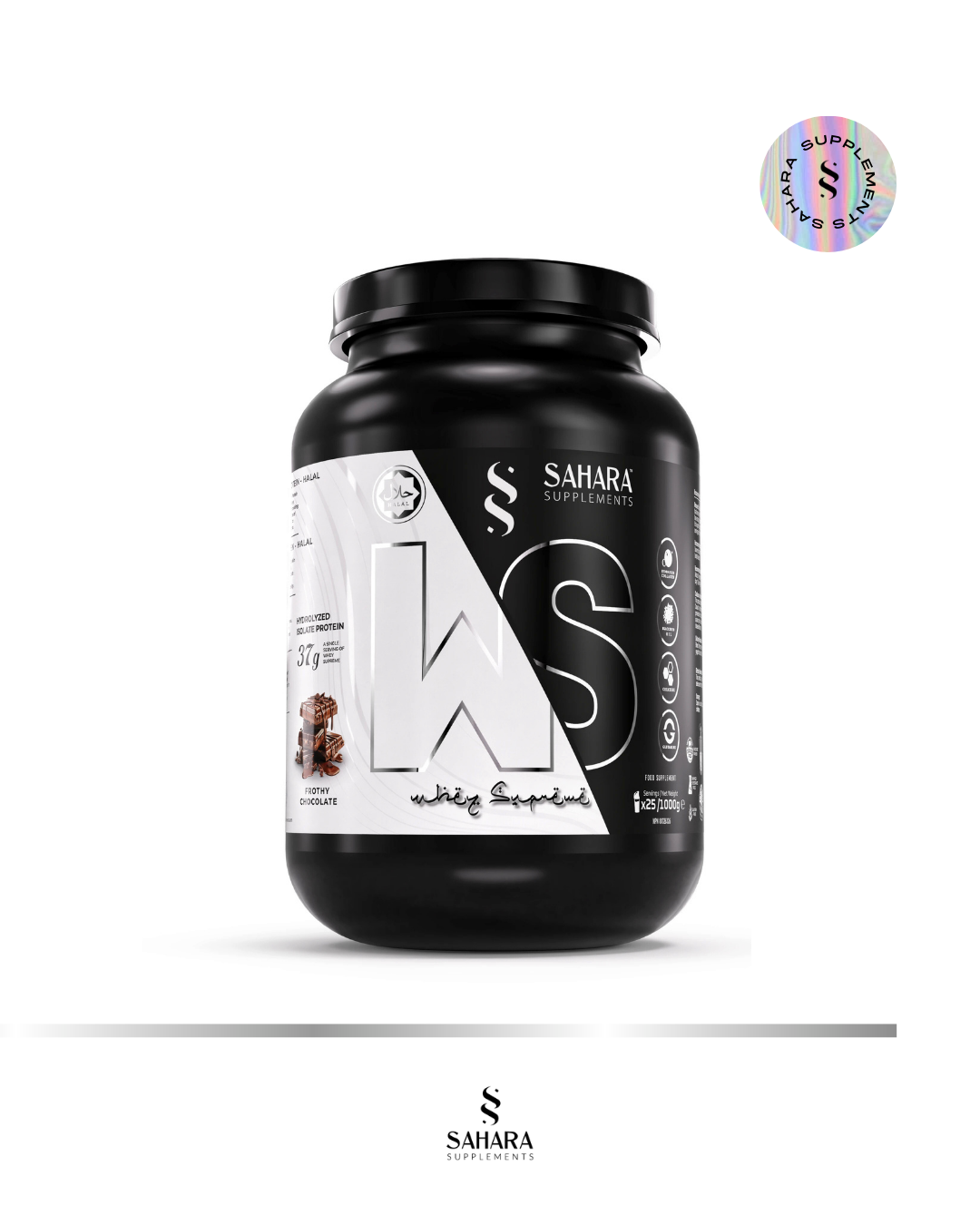
Whey Supreme is positioned as an everyday tool, something designed to be used consistently, not occasionally. It’s meant to support routine protein intake and performance-minded habits without making your nutrition more complicated than it needs to be.
In other words, it’s designed to fit the principles we’ve discussed: fewer decisions, clearer defaults, less friction.
Subscription exists for the same reason routines exist: to reduce repeated decisions.
It is not a perk bundle. It’s a pricing and delivery structure designed for consistent use, helping you avoid the most common failure point: running out and breaking the routine.
Subscriber pricing is simply part of that structure.
The goal isn’t to “push” subscriptions. The goal is to align the supply system with how habits actually work: consistency improves when friction decreases.
For people who value routine, a subscription simply turns a repeated decision into a default.
If you want discipline to feel less like a battle, don’t start with motivation. Start with design.
Here are a few simple questions that move you from intention to system:
What is the smallest version of the habit you can repeat?
Consistency compounds when the habit is doable on your busiest days.
What cue will trigger the habit?
Attach it to something stable: a time, a place, or an existing routine.
What friction is currently breaking your routine?
Running out? Unclear timing? Too many options? Solve the real bottleneck.
What default can you set so you don’t have to decide again?
Defaults reduce decision fatigue. They make follow-through more automatic.
How will you return after you miss a day?
A strong system doesn’t require perfection. It requires a quick return.
Discipline isn’t willpower. It’s a process of making the right choice easier, again and again, until it becomes normal.
If there’s one core insight worth keeping, it’s this:
Discipline improves when systems are designed correctly.
When friction is reduced, decisions are simplified, and routines are supported by the environment, consistency becomes less heroic and more realistic.
If you want to see how Sahara applies these principles in practice, explore Whey Supreme and our approach to consistency and standards.

