Cart
0
You may also like






If you're exhausted despite getting 8 hours of sleep, you're not imagining it—and you're not alone. Persistent fatigue has become the defining symptom of modern life, affecting up to 20% of healthy adults. You wake up tired. Coffee doesn't help. By 2 PM, you're barely functional. Rest doesn't restore you. And no matter what you try, the exhaustion never truly lifts.
Here's what most people don't realize: chronic fatigue isn't caused by lack of sleep—it's caused by broken energy production at the cellular level. When your mitochondria (the "power plants" inside your cells) can't produce ATP efficiently, when your gut health tanks and steals 70% of your immune energy, when chronic inflammation exhausts your system, or when amino acid deficiencies tank your neurotransmitters—no amount of rest will fix it.
In this guide, we'll break down exactly why you're always tired, the critical difference between burnout and chronic fatigue syndrome, how ATP depletion robs your energy at the cellular level, and how strategic supplementation with creatine, complete protein, glutamine, and anti-inflammatory compounds can restore your vitality—giving you back the energy you thought was gone forever.
Most people use "tired," "fatigued," "burned out," and "chronic fatigue" interchangeably. But these are distinct conditions with different causes and require different solutions.
Your body's natural signal that you need rest after physical or mental exertion. Key characteristic: Rest fixes it. After a good night's sleep or a weekend off, you feel restored.
This is NORMAL and healthy—your body is telling you to recover.
A state of physical, emotional, and mental exhaustion caused by prolonged exposure to stress and overload.
Key characteristics:
The nervous system is locked in stress mode (chronic cortisol elevation, HPA axis dysfunction)
Emotional exhaustion and cynicism (you stop caring about things that used to matter)
Sleep helps somewhat, but you're never fully restored
The distinction: Burnout is primarily a nervous system dysregulation problem. Your body's stress response is stuck in "on" mode.
Clinical insight: "Burnout is largely about the nervous system being locked into stress mode."
A complex, disabling disorder characterized by extreme fatigue lasting at least 6 months that doesn't improve with rest.
Key characteristics:
Post-exertional malaise (PEM): Even small efforts (showering, talking, eating) cause a disproportionate crash that lasts days
Bone-deep exhaustion not eased by rest
Severe brain fog and cognitive impairment
Sleep doesn't restore energy
The distinction: Chronic fatigue syndrome involves impaired cellular energy production—your mitochondria are not functioning properly.
Clinical insight: "Unlike burnout, where reducing stress and improving sleep often make a big difference, chronic fatigue requires a much more layered approach: supporting immune function, gut health, mitochondria, and gently retraining the body's tolerance for activity."
|
Symptom |
Normal Fatigue |
Burnout |
Chronic Fatigue Syndrome |
|
Improves with rest? |
Yes |
Somewhat |
No |
|
Post-exertional malaise? |
No |
No |
Yes (hallmark) |
|
Brain fog? |
Mild |
Moderate |
Severe |
|
Duration |
Hours-days |
Weeks-months |
6+ months |
|
Energy system impairment? |
No |
No |
Yes |
Key takeaway: If rest doesn't restore your energy and small tasks cause crashes lasting days, you likely have chronic fatigue syndrome—not just burnout. This requires addressing energy production at the mitochondrial level.
Whether you're burned out or dealing with chronic fatigue, the common thread is ATP depletion—your cells don't have enough energy to function.
Adenosine triphosphate (ATP) is the universal energy molecule in every cell of your body. It powers EVERYTHING: muscle contraction, brain function, digestion, immune responses, hormone production.
The problem: Your muscles only store enough ATP for 1-2 seconds of maximal effort. After that, your body needs to rapidly regenerate ATP—or you run out of energy and fatigue sets in.
Energy Thief #1: Chronic Stress & Cortisol
Elevated cortisol disrupts mitochondrial function, reducing ATP production.
Energy Thief #2: Chronic Inflammation
Inflammatory cytokines (TNF-α, IL-6) directly impair mitochondria, reducing energy output. This is why fatigue is the #1 symptom of chronic inflammation.
Energy Thief #3: Gut Dysbiosis & Leaky Gut
70% of your immune system resides in your gut. When gut health tanks, your immune system goes into overdrive, consuming massive amounts of ATP. Result: chronic exhaustion.
Energy Thief #4: Amino Acid Deficiencies
Amino acids like glutamine and BCAAs support mitochondrial function. When protein intake is inadequate, mitochondria can't produce ATP efficiently.
Energy Thief #5: Neurotransmitter Depletion
Your brain requires amino acids to produce dopamine (motivation), serotonin (mood), and norepinephrine (focus). When amino acids are low, mental energy crashes—even if you have physical ATP.
Energy Thief #6: Low Creatine Stores
If creatine levels are depleted, your phosphocreatine system can't rapidly regenerate ATP. Result: early fatigue during physical AND mental tasks.
Creatine isn't just for bodybuilders—it's one of the most powerful interventions for restoring cellular energy in anyone experiencing chronic fatigue.
When ATP breaks down to ADP during energy demand, phosphocreatine rapidly donates its phosphate group back to ADP, regenerating ATP instantly.
The result: Your cells can produce ATP up to 40% faster, expanding your energy reservoir and delaying fatigue.
Critical finding from research: "Creatine supplementation can increase total muscle creatine content by up to 20% and phosphocreatine stores by 10-40% after just one week."
Most people think creatine is only for muscles, but your brain is the most energy-hungry organ in your body—consuming 20% of your total ATP despite being only 2% of body weight.
How creatine supports brain energy:
Increases ATP availability in neurons (brain cells)
Protects mitochondria from oxidative stress
Improves cognitive performance during mental fatigue
Reduces brain fog and enhances focus
Translation: Creatine doesn't just give you physical energy—it fuels your brain, improving mental clarity, focus, and motivation.
Recent research (2022) found that creatine supplementation enhances immunological function by increasing intracellular ATP in immune cells (neutrophils).
The fatigue connection: Many people with chronic fatigue have compromised immune function. Restoring ATP in immune cells can reduce the constant "fighting something off" exhaustion.

ATP gives you physical energy. But what about mental energy—motivation, focus, drive, mood? That's where amino acids come in.
Tyrosine → Dopamine & Norepinephrine
Dopamine = motivation, reward, drive. Norepinephrine = alertness, focus, energy.
When tyrosine is low: reduced motivation, brain fog, apathy, procrastination.
Tryptophan → Serotonin
Serotonin = mood stability, emotional regulation, sleep quality.
When tryptophan is low: depression, anxiety, poor sleep, irritability.
Glutamate → GABA
GABA = calm, relaxation, stress resilience.
When glutamate is low: anxiety, racing thoughts, poor stress tolerance.
The critical insight: "When amino acid intake is inconsistent or insufficient, neurotransmitter production may become less stable. This can show up as reduced cognitive endurance, lower motivation and drive, increased distractibility, and greater sensitivity to stress."
The solution: Consuming complete, high-quality protein (containing all nine essential amino acids) ensures consistent neurotransmitter production, optimal mitochondrial function, preserved muscle mass, and sustained energy—both physical and mental.
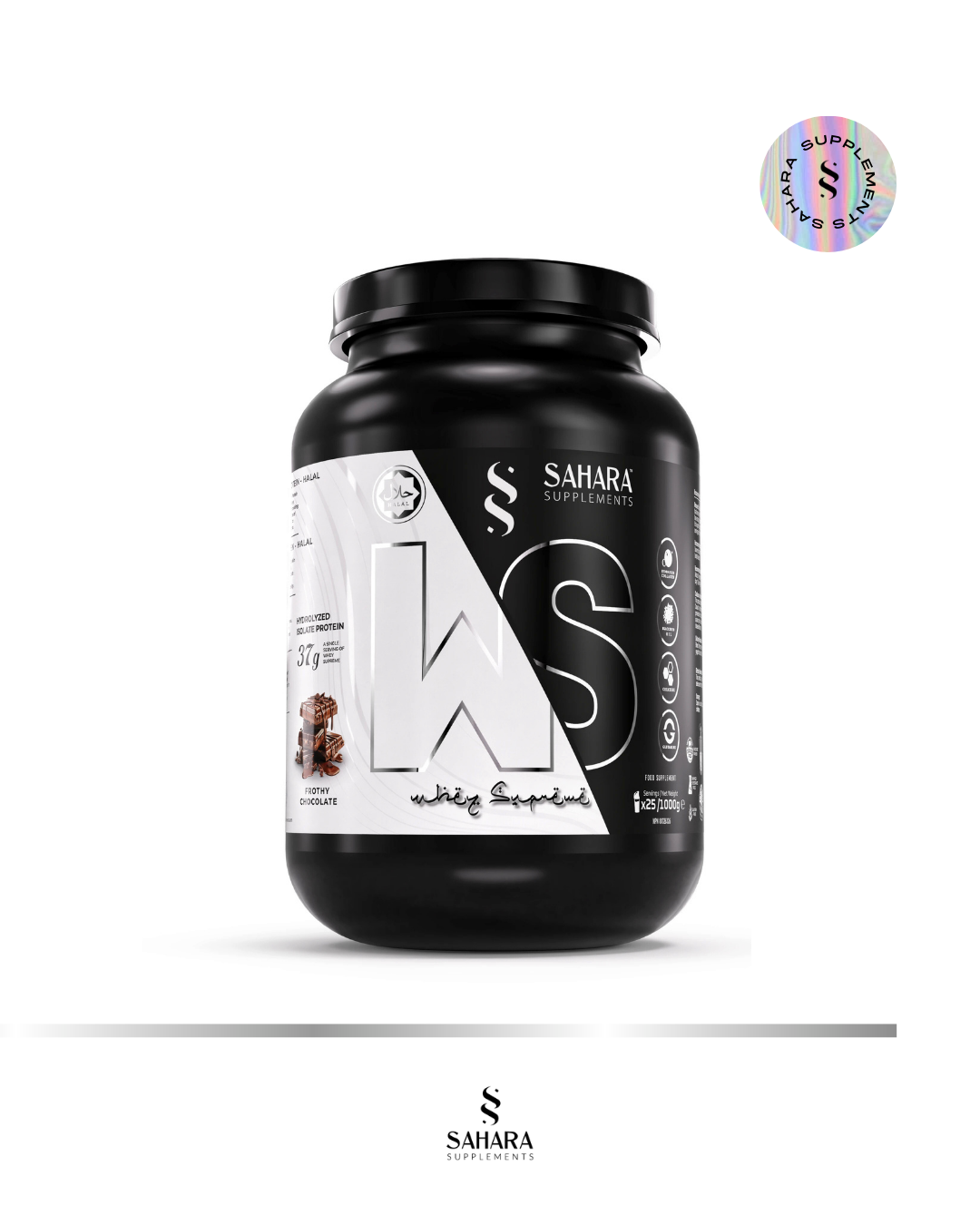
Most energy supplements target ONE pathway—caffeine for temporary stimulation, B-vitamins for metabolism support, or iron for oxygen transport. Whey Supreme takes a comprehensive, multi-pathway approach to restore energy at the cellular, neurological, immune, and gut levels simultaneously.
Hero Ingredient: Creatine Monohydrate (3g per serving)
Increases phosphocreatine stores by 10-40%, expanding ATP reservoir
Accelerates ATP regeneration during high-demand activities (physical exertion, mental work, immune responses)
Supports mitochondrial function by transporting energy between mitochondria and cytosol
Enhances immune cell ATP, strengthening immune function and reducing infection-driven fatigue
Result: More energy available on demand. Less fatigue during workouts, workdays, and daily tasks. Faster recovery between efforts.
Hero Ingredient: Hydrolyzed Whey Protein Isolate (23g per serving)
Provides all nine essential amino acids, including tyrosine (for dopamine/norepinephrine) and tryptophan (for serotonin)
Rapidly absorbed (30-60 minutes) thanks to hydrolyzed form, ensuring amino acids reach the brain quickly
Supports consistent neurotransmitter production, preventing motivation crashes, brain fog, and mood dips
Result: Sustained mental energy, improved focus, stable mood, reduced brain fog. You feel mentally "on" throughout the day, not just after coffee.
Hero Ingredient: L-Glutamine (3.5g per serving)
Heals leaky gut by strengthening intestinal tight junctions, preventing bacterial toxins (LPS) from entering the bloodstream
Reduces gut-driven inflammation, which exhausts your immune system and drains ATP
Frees up immune energy by reducing the constant low-grade immune activation caused by leaky gut
Result: When gut health improves, your immune system stops wasting ATP on constant firefighting, and that energy becomes available for YOU—restoring vitality, reducing fatigue, and improving recovery.
Hero Ingredient: Black Seed Oil Extract (670mg per serving, standardized for thymoquinone)
Reduces inflammatory cytokines (TNF-α, IL-6) that directly impair mitochondrial function
Blocks NF-κB inflammatory pathway, preventing chronic immune activation that exhausts ATP reserves
Protects mitochondria from oxidative stress (increases glutathione, catalase, SOD)
Calms chronic inflammation—the #1 cause of persistent fatigue
Result: When inflammation drops, mitochondria function optimally, ATP production increases, and fatigue lifts. You go from "exhausted all day" to "I have energy again."

Based on clinical research and user feedback, here's the realistic timeline when using Whey Supreme:
Week 1-2: Cellular Energy Begins to Increase
• Creatine loading increases phosphocreatine stores by 20%
• Glutamine starts healing leaky gut, reducing gut-driven inflammation
• You might notice: slightly better energy during workouts, less afternoon crash
• ATP levels: Early increase in muscle and immune cells
Week 2-4: Mental Clarity Improves
• Consistent amino acid intake stabilizes neurotransmitter production
• Brain fog begins lifting
• Black seed oil's anti-inflammatory effects kick in
• You might notice: improved focus, better motivation, stable mood throughout the day
• Energy: 20-30% improvement from baseline
Week 4-6: Physical Energy Rebounds
• Mitochondrial function improves as inflammation drops
• Creatine stores fully saturated (ATP regeneration at peak efficiency)
• You might notice: wake up feeling rested, sustained energy all day, faster recovery
• Energy: 40-50% improvement from baseline
Week 6-8: Consistent Vitality Established
• ATP production optimized across all systems (muscle, brain, immune)
• You might notice: "I feel like myself again," physical and mental energy synchronized
• Energy: 60-70% improvement from baseline
Week 8-12: Long-Term Energy Optimization
• Mitochondrial health fully restored
• Neurotransmitter production consistent
• You realize: your fatigue wasn't "just part of life"—it was fixable
The key difference: Caffeine gives you 2-4 hours of borrowed energy followed by a crash. ATP restoration gives you sustained, natural energy all day—with no crash.
For Muslim consumers, finding halal-certified supplements has been nearly impossible. Most formulas contain questionable ingredients, non-halal additives, or animal-derived compounds from non-compliant sources.
Whey Supreme is ISNA halal-certified, covering:
Halal whey protein isolate (per Islamic law)
Halal bovine collagen (ethical slaughter practices from grass-fed, humanely-raised cows)
Halal black seed oil (honoring 1,400+ years of Islamic medicine tradition)
Supply chain transparency (full traceability from farm to finished product)
No cross-contamination (no pork derivatives, alcohol, or non-compliant additives)
1. Prioritize Sleep Quality (Not Just Quantity)
Sleep is when ATP stores replenish and mitochondria repair. Aim for 7-9 hours with good sleep hygiene (cool room, dark, no screens 1 hour before bed).
2. Manage Stress (HPA Axis Reset)
Chronic stress = chronic cortisol = mitochondrial dysfunction. Daily stress management (breathwork, meditation, nature time) reduces cortisol and restores energy.
3. Move Daily (But Don't Overtrain)
Moderate exercise increases mitochondrial density and ATP production. BUT if you have chronic fatigue syndrome, start gently and avoid post-exertional malaise.
4. Heal Your Gut (70% of Immune Energy)
Probiotic-rich foods, fiber, bone broth, and gut-supporting supplements reduce immune system ATP drain.
5. Reduce Inflammatory Foods
Seed oils, ultra-processed foods, and added sugars promote inflammation that impairs mitochondria. Focus on anti-inflammatory whole foods.
✅ You're a Good Candidate If:
• You're tired despite adequate sleep (8+ hours doesn't restore you)
• You experience afternoon crashes (2-3 PM energy collapse)
• You have brain fog or poor focus (mental fatigue)
• You feel "wired but tired" (classic burnout symptom)
• Small tasks feel overwhelming (possible post-exertional malaise)
• You have chronic inflammation (fatigue is warning sign #1)
• You have gut health issues (bloating, irregular digestion = immune energy drain)
• You're an athlete with overtraining symptoms (fatigue, poor recovery, declining performance)
• You're looking for halal-certified energy support (religious compliance + premium quality)
⚠️ Consult a Healthcare Provider First If:
• Your fatigue is sudden and severe (may indicate acute illness requiring diagnosis)
• You have post-exertional malaise lasting days (possible ME/CFS—needs medical evaluation)
• You experience chest pain, shortness of breath, or fainting (cardiac evaluation required)
• Your fatigue is accompanied by unexplained weight loss (warrants medical workup)
For too long, we've been told that chronic fatigue is "normal"—just part of being busy, getting older, or working hard. It's not.
Persistent exhaustion is a signal that your cellular energy systems are failing—whether from ATP depletion, neurotransmitter deficiencies, chronic inflammation, gut dysbiosis, or mitochondrial impairment. And here's the empowering truth: these are all modifiable.
Whey Supreme isn't just a protein powder—it's a comprehensive energy restoration system. 3g of creatine to turbocharge ATP regeneration. 23g of halal-certified complete protein to fuel neurotransmitter synthesis. 3.5g of glutamine to heal your gut and reclaim immune energy. 670mg of black seed oil to calm the inflammation exhausting your mitochondria. Every ingredient, clinically dosed. Every batch, third-party tested (Informed Choice and Sport Certified). Every serving Health Canada Approved, and halal-certified for ethical sourcing.
You don't have to live tired. Your energy is waiting—you just need to restore the systems that produce it.
Chronic fatigue overview: Mayo Clinic, 2026; StatPearls, 2025; Healthline, 2020
Burnout vs. chronic fatigue: Nourish to Soar, 2025; Naya Medic, 2025; YouTube medical analysis, 2024
Creatine and ATP: Jinfiniti, 2025; Love Life Supplements, 2025; Harvard Brain Science, 2021
Amino acids and neurotransmitters: Bridging the Gaps, 2022; Neuroscience Wellness, 2026; Ubie Health, 2026
Mitochondrial function and fatigue: Ubie Health, 2026; Nourish to Soar, 2025
Creatine and immune function: PMC, 2022
Post-exertional malaise: Harvard Health, 2023; Better Health Victoria, 1999
Chronic inflammation and fatigue: Various sources, 2023-2026
This article is for informational purposes only and does not constitute medical advice. These statements have not been evaluated by the Food and Drug Administration. This product is not intended to diagnose, treat, cure, or prevent any disease. Always consult a healthcare provider before starting any new supplement regimen, especially if you have existing health conditions or take medications.

