Cart
0
You may also like





You drink your protein shake. You hit your daily protein target. You track your macros religiously. But here's the uncomfortable truth most supplement companies won't tell you: consuming protein and absorbing protein are two completely different things.
If your digestive system can't break down the protein you consume into absorbable amino acids, you're literally flushing money (and gains) down the toilet. Worse, undigested protein doesn't just pass through harmlessly—it ferments in your colon, feeding pathogenic bacteria, producing ammonia and inflammatory compounds, and damaging your gut lining.
This is the absorption crisis: millions of people consuming 100-150g of protein daily, yet their bodies are only absorbing 60-70% of it because of digestive enzyme deficiencies, gut health issues, or simply choosing the wrong form of protein.
In this guide, we'll break down exactly what happens when protein isn't absorbed properly (spoiler: it's worse than just wasted money), why most protein powders fail the absorption test, what the 2023-2026 research says about hydrolyzed protein's superior bioavailability, and how to fix your absorption so every gram of protein you consume actually reaches your muscles.
No more wasted protein. No more bloating from undigested shakes. Just maximum absorption and results.
Most people think poor protein absorption means "not building muscle as fast." The reality is far worse—it's a cascade of digestive, inflammatory, and metabolic problems.
The ideal scenario:
Protein is broken down into amino acids in the small intestine, absorbed through the intestinal lining, and enters the bloodstream to be used for muscle repair, immune function, enzyme production, and countless other processes.
What actually happens when digestion fails:
Undigested protein leaves the small intestine and enters the colon, where it does NOT belong.
Why this is a problem:
The colon's job is to ferment complex carbohydrates (fiber) to produce short-chain fatty acids like butyrate, which protect gut health. The colon is NOT designed to ferment protein.
When protein ferments in the colon:
Ammonia production increases—a toxic waste product that damages the intestinal lining and stresses the liver
Amines form—inflammatory compounds that irritate the gut
Pathogenic bacteria proliferate—species like Alistipes, Bilophila, and Bacteroides (the "bad guys") thrive on undigested protein, crowding out beneficial bacteria
Short-chain fatty acid production drops—because protein fermentation produces FAR less butyrate than carbohydrate fermentation
The cascade effect:
Pathogenic bacteria produce more ammonia → gut lining becomes inflamed → intestinal permeability increases (leaky gut) → undigested food particles and bacterial toxins enter the bloodstream → systemic inflammation.
Result: You're not just failing to build muscle, you're actively damaging your gut health and triggering inflammation throughout your body.

When protein reaches the colon undigested, colonic bacteria ferment it, producing gas (methane, hydrogen sulfide, ammonia).
What you experience:
Foul-smelling gas (ammonia and sulfur compounds)
Bloating and abdominal distension
Cramping and discomfort
Frequent bathroom trips
The vicious cycle:
Standard protein powder → inadequate digestion → fermentation → bloating → people blame "protein intolerance" → switch to lower-quality protein or reduce intake → muscle recovery suffers.
But the problem isn't protein itself—it's poor absorption.
Your gut lining is made of rapidly renewing cells that rely on amino acids (the building blocks of protein) to regenerate and function properly.
The paradox:
You NEED protein to maintain a healthy gut lining
But if you CAN'T absorb protein, the gut lining breaks down
A damaged gut lining FURTHER impairs protein absorption
Research from 2025:
"Without enough high-quality protein, this lining can break down, increasing the risk for leaky gut, inflammation, food sensitivities, and nutrient malabsorption".
The inflammatory cascade:
Leaky gut → bacterial toxins (LPS) enter bloodstream → immune system activates → chronic inflammation → impaired recovery, fatigue, brain fog, skin issues, joint pain.
If your body can't break down protein into amino acids, muscle protein synthesis doesn't happen.
The math:
You consume 150g protein daily
Your digestive system can only break down 100g (67% efficiency)
50g ferments in the colon (wasted + harmful)
You're effectively eating a 100g protein diet, not 150g
For athletes and active individuals:
This gap between consumed protein and absorbed protein is the difference between gains and stagnation.
Poor absorption isn't random. It's caused by three primary factors that are epidemic in modern populations.
The process:
Protein digestion requires a cascade of enzymes, each performing a specific step:
Pepsin (stomach)—activated by stomach acid; begins breaking down proteins into smaller peptides
Trypsin and chymotrypsin (pancreas → small intestine)—further break peptides into smaller fragments
Peptidases (brush border of small intestine)—perform final breakdown into dipeptides, tripeptides, and single amino acids
Only dipeptides, tripeptides, and single amino acids can be absorbed through the intestinal lining.
What causes enzyme deficiency?
Aging—pancreatic enzyme production declines with age
Chronic stress—suppresses digestive enzyme secretion
Low stomach acid—reduces pepsin activation (common in people taking antacids/PPIs)
Pancreatic insufficiency—chronic inflammation, alcohol use, diabetes
Gut dysbiosis—pathogenic bacteria disrupt enzyme function
Poor diet—high-processed food intake impairs enzyme production
Result: Protein stays in large, unabsorbable fragments.
Your gut microbiome directly influences how well you digest and absorb protein.
How gut dysbiosis impairs absorption:
Pathogenic bacteria produce inflammatory compounds that damage the intestinal lining
Beneficial bacteria decline, reducing production of digestive enzymes and protective short-chain fatty acids
Intestinal permeability increases (leaky gut), causing immune activation that further impairs digestion
Nutrient transporters are damaged, reducing absorption even when protein is properly digested
Research from 2025:
"Recent research suggests that the microbes in your gut could influence how well you digest and absorb protein, which means your gains, recovery, and overall health may depend as much on your gut microbiome as your macros".
The vicious cycle:
Dysbiosis → poor absorption → undigested protein ferments → feeds pathogenic bacteria → worsens dysbiosis.
Not all protein powders are created equal. Molecular size determines how easily protein can be digested and absorbed.
The three forms of whey protein:
Whey Protein Concentrate (WPC)
70-80% protein content
Larger protein molecules (intact)
Contains lactose and fat
Requires full enzymatic breakdown
Absorption time: 60-90 minutes
Whey Protein Isolate (WPI)
90%+ protein content
Larger molecules (intact)
Minimal lactose and fat
Requires full enzymatic breakdown
Absorption time: 60-90 minutes
Whey Protein Hydrolysate (WPH)
90%+ protein content
Pre-digested into small peptides (dipeptides and tripeptides)
Essentially no lactose and fat
Bypasses most enzymatic breakdown (already done)
Absorption time: 15-30 minutes
The critical difference:
Standard whey (concentrate or isolate) must be broken down by your digestive enzymes. If your enzymes are deficient, absorption fails.
Hydrolyzed whey is already broken down into small peptides—it bypasses the enzyme bottleneck and is absorbed rapidly.
The supplement industry loves to throw around the term "bioavailability," but what does it actually mean? And why does it matter for your gains?
Definition: Bioavailability is the percentage of a nutrient that is actually absorbed and becomes available for use in the body.
Example:
You consume 30g whey protein concentrate
Your body absorbs 20g (67% bioavailability)
10g ferments in the colon (wasted + harmful)
High bioavailability = more amino acids reach your muscles = better results.

Researchers compared whey protein concentrate (WPC) to low-molecular-weight protein hydrolysate (LMWPH) using intestinal absorption models.
Key findings:
Permeation of protein: LMWPH significantly higher than WPC at all time points (p < 0.001)
Permeation of amino nitrogen: LMWPH significantly higher than WPC (p < 0.001 and p < 0.05)
Caco-2 cell permeability: LMWPH showed higher intestinal permeability than WPC
In vivo absorption: Single high-dose administration of LMWPH to rats rapidly increased serum protein concentration within 20 minutes, whereas WPC gradually increased after 40 minutes
Conclusion: "LMWPH has high bioavailability and can be used as an effective protein source... Although the total amount of WPC and LMWPH absorption was similar, LMWPH absorption rate was higher".
Translation: Hydrolyzed whey delivers amino acids to your muscles 2X FASTER than standard whey.
The bioavailability threshold:
Absorption decreases rapidly when molecular weight exceeds 500 Daltons.
Comparison:
Standard whey protein: 10,000-30,000 Daltons (requires full enzymatic breakdown)
Hydrolyzed whey: 500-3,000 Daltons (small enough for rapid absorption)
Why this matters:
Hydrolyzed peptides are already below the absorption threshold—they don't need extensive enzymatic breakdown.
A 2024 study examined whether digestive enzyme supplements improve protein absorption.
Findings:
Enzyme supplements significantly enhanced protein hydrolysis and reduced gastric viscosity by 2.75-fold
Protease enzymes (particularly fungal-derived proteases) showed superior acid stability
High-activity protease formulations reduced incompletely digested protein fragments
However:
Even with enzyme supplementation, standard whey still requires 40-60 minutes for full digestion.
Hydrolyzed whey, by contrast, is ALREADY enzymatically processed—it delivers amino acids in 15-30 minutes without requiring additional enzyme support.
The advantage: You're not relying on your body's enzyme production; the work is already done.
Research shows:
Muscle protein synthesis is maximally stimulated when amino acids are delivered rapidly post-exercise.
Hydrolyzed whey's advantage:
Amino acids appear in bloodstream in 15-30 minutes
Peaks muscle protein synthesis during the optimal window
Ideal for fasted training (rapid reversal of catabolism)
Superior for multiple daily training sessions (faster recovery between sessions)
Standard whey:
Amino acids appear in bloodstream in 60-90 minutes
Still effective, but slower stimulus
Less optimal for fasted training or high-frequency training
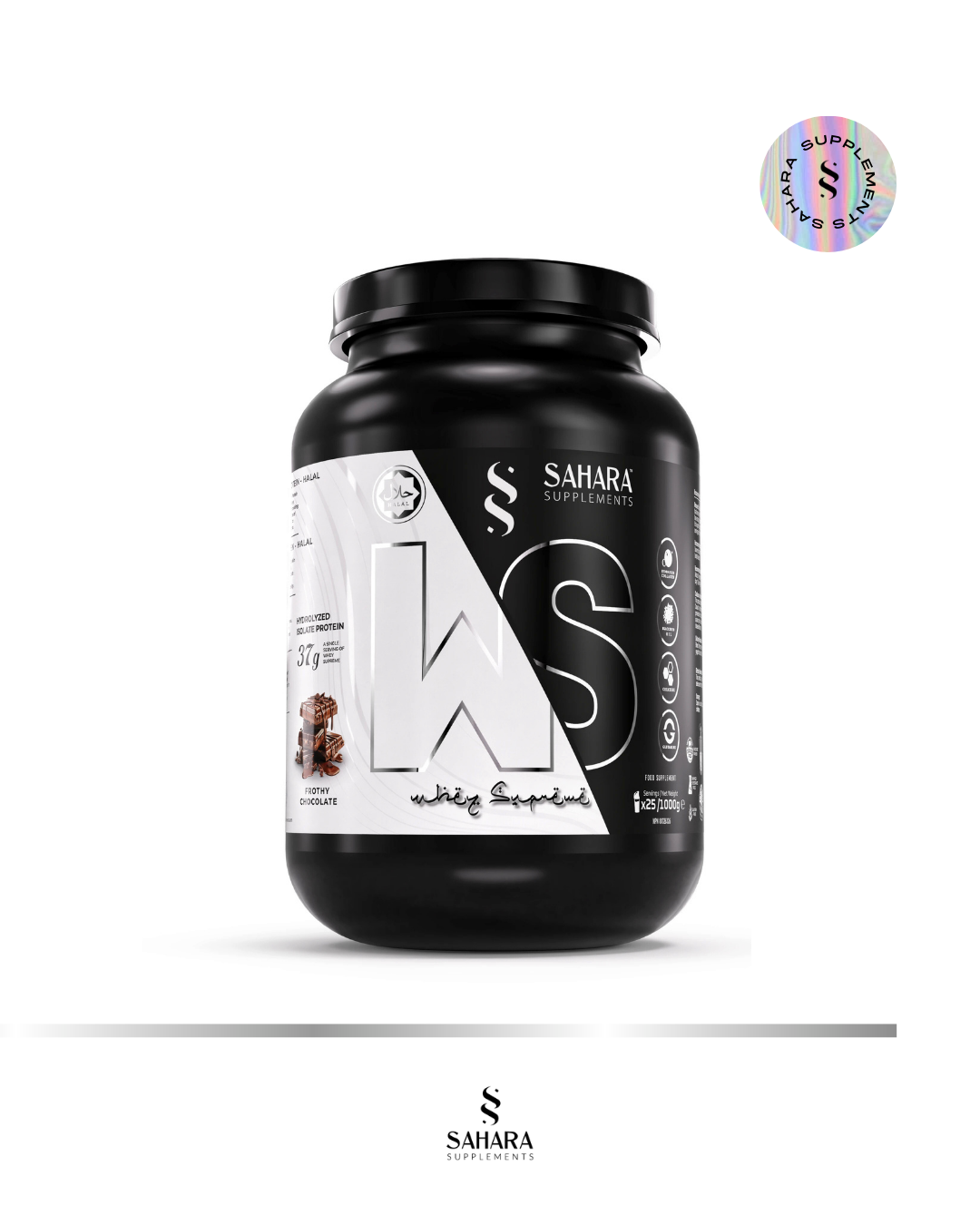
Most protein powders address ONE thing: delivering protein. Whey Supreme takes a comprehensive approach to ensure that protein is not only consumed, but fully absorbed and utilized by your body.
Hero Ingredient: Hydrolyzed Whey Protein Isolate (23g per serving)
Pre-digested into small peptides (500-3,000 Daltons)—already broken down into absorbable dipeptides and tripeptides
Bypasses the enzyme bottleneck—doesn't require full digestive enzyme cascade
Absorbed in 15-30 minutes—delivers amino acids to muscles 2X faster than standard whey
Zero bloating or digestive discomfort—because it doesn't require heavy enzymatic breakdown
Complete amino acid profile including leucine per serving, the trigger for muscle protein synthesis
Clinical validation (2023):
"LMWPH showed higher Caco-2 cell and intestinal permeability than WPC, and a single high-dose administration of LMWPH to rats rapidly increased serum protein concentration... LMWPH has high bioavailability and can be used as an effective protein source".
Result: Every gram of protein you consume is absorbed efficiently; no wasted protein fermenting in your colon.
For Muslim consumers: Whey Supreme uses halal-certified whey protein isolate, ensuring ethical sourcing and religious compliance.
Hero Ingredient: L-Glutamine (3.5g per serving)
Heals leaky gut by strengthening intestinal tight junctions
Restores the gut lining (which is made of protein and requires amino acids to regenerate)
Reduces intestinal permeability, preventing bacterial toxins from entering the bloodstream
Supports beneficial bacteria while starving pathogenic species
Research validation (2025):
"Your gut lining is made up of rapidly renewing cells that rely on amino acids to regenerate and function properly. Without enough high-quality protein, this lining can break down, increasing the risk for leaky gut, inflammation, food sensitivities, and nutrient malabsorption".
Result: A healthy gut lining = optimal nutrient absorption. You're fixing the foundation so ALL nutrients (protein, vitamins, minerals) are absorbed efficiently.
Hero Ingredient: Black Seed Oil Extract (670mg per serving, standardized for thymoquinone)
Inhibits pro-inflammatory cytokines (TNF-α, IL-6, IL-1β) that damage the intestinal lining
Blocks NF-κB inflammatory pathway, preventing chronic immune activation
Increases endogenous antioxidant defenses (glutathione, SOD, catalase)
Protects gut epithelial cells from oxidative damage
Why this matters:
Chronic inflammation damages nutrient transporters in the intestinal lining, impairing absorption even when protein is properly digested.
Result: Reduced inflammation = restored nutrient transport = better absorption of everything you consume.
Cultural note: Black seed has been used in Islamic medicine for over 1,400 years. Whey Supreme uses halal-certified ingredients, honoring this tradition while delivering clinically-validated anti-inflammatory benefits.
Hero Ingredient: Hydrolyzed Bovine Collagen (8g per serving)
Provides glycine, proline, and hydroxyproline—amino acids critical for gut lining repair
Supports connective tissue integrity in the intestinal wall
Complements whey protein by providing amino acids whey lacks
Research insight:
Collagen-specific amino acids (particularly glycine and proline) support intestinal epithelial cell regeneration and barrier function.
Result: Comprehensive amino acid support for both muscle recovery AND gut health.
For Muslim consumers: Whey Supreme uses halal-certified bovine collagen from grass-fed, humanely-raised cows, ensuring ethical sourcing and religious compliance.
Based on clinical research and user feedback, here's the realistic timeline when using Whey Supreme to fix absorption:
Week 1: Immediate Relief from Bloating
• Hydrolyzed protein bypasses enzyme bottleneck (absorbed in 15-30 minutes)
• Glutamine begins sealing leaky gut
• Black seed oil starts reducing inflammation
• You might notice: ZERO bloating, gas, or discomfort (even on empty stomach)
• This is your first sign absorption is working
Week 1-2: Gut Lining Begins Healing
• Glutamine strengthens tight junctions
• Black seed oil reduces gut inflammation
• Collagen supports intestinal wall integrity
• You might notice: improved digestion overall, less food sensitivity
• Nutrient absorption: +10-15% improvement
Week 2-3: Beneficial Bacteria Rebalance
• Pathogenic bacteria (fed by undigested protein) decline
• Beneficial bacteria proliferate (supported by healed gut)
• Ammonia and amine production drops
• You might notice: reduced gas, better bowel regularity, clearer skin
• Nutrient absorption: +20-30% improvement
Week 3-4: Full Absorption Restoration
• Gut lining fully healed
• Microbiome balanced
• Nutrient transporters functioning optimally
• Inflammation resolved
• You might notice: consistent energy, faster recovery, visible muscle gains
• Nutrient absorption: +30-40% improvement
What this means in practice:
If you were consuming 150g protein daily but only absorbing 100g (67%), you're now absorbing 130-140g (87-93%), a 30-40g gain in absorbed protein without changing your diet.
For Muslim consumers, finding halal-certified protein with superior absorption has been nearly impossible. Most hydrolyzed proteins contain questionable additives or non-halal processing aids.
Whey Supreme is ISNA halal-certified, covering:
Halal whey protein isolate (halal-certified dairy farms)
Halal hydrolyzed collagen (from grass-fed, humanely-raised cows; ethical slaughter per Islamic law)
Halal black seed oil (honoring 1,400 years of Islamic medicine tradition)
Supply chain transparency (full traceability from farm to finished product)
No cross-contamination (no pork derivatives, alcohol, or non-compliant additives)
What halal certification means for ALL consumers:
✅ Premium quality standards (halal certification requires rigorous third-party auditing)
✅ Humane animal treatment (Islamic slaughter practices minimize animal suffering)
✅ Ethical sourcing (full supply chain accountability)
✅ Clean label (transparent formulation, no hidden ingredients)
For Muslim consumers: Your faith and your gains no longer conflict. You can maximize protein absorption, build muscle, and recover faster, all while maintaining religious compliance.
For non-Muslim consumers: Halal certification signals premium quality and ethical sourcing; benefits that apply to everyone, regardless of religion.
Supplements work best as part of a comprehensive strategy. Here are five research-backed tactics to optimize absorption:
1. Chew Your Food Thoroughly (Mechanical Digestion Matters)
Digestion begins in the mouth. Thorough chewing increases surface area, making it easier for enzymes to break down protein.
2. Don't Overload Your System (Protein Timing Matters)
Spread protein intake across 2-5 meals daily with each meal containing 30-50g+ of protein. This makes it easier on your digestive system.
3. Support Stomach Acid Production
Low stomach acid impairs pepsin activation (the first step in protein digestion). Avoid antacids/PPIs unless medically necessary. Consider apple cider vinegar or betaine HCl with meals (consult healthcare provider first).
4. Manage Stress (Stress Suppresses Digestion)
Chronic stress shuts down digestive enzyme secretion ("fight or flight" mode). Practice stress management: deep breathing before meals, mindfulness, adequate sleep.
5. Eat Fermented Foods (Support Your Microbiome)
Beneficial bacteria support protein digestion. Include yogurt, kefir, sauerkraut, kimchi daily to maintain healthy microbiome diversity.
✅ You're a Good Candidate If:
• You experience bloating, gas, or discomfort after protein shakes (undigested protein fermentation)
• You're not seeing results despite eating enough protein (absorption failure)
• You have digestive issues (IBS, leaky gut, dysbiosis) (compromised absorption capacity)
• You're over 30 (digestive enzyme production declines with age)
• You take antacids or PPIs regularly (low stomach acid impairs digestion)
• You train fasted (need rapid amino acid delivery)
• You have food sensitivities or skin issues (often linked to leaky gut and poor absorption)
• You want maximum efficiency (no wasted protein, no digestive drama)
• You're looking for halal-certified protein (religious compliance + premium quality)
⚠️ Consult a Healthcare Provider First If:
• You have pancreatic insufficiency or chronic pancreatitis (may require prescription enzyme replacement)
• You have severe malabsorption disorders (celiac disease, Crohn's disease, ulcerative colitis)
• You're taking medications that affect digestion (discuss timing and interactions)
For too long, the fitness industry has obsessed over protein quantity—150g, 180g, 200g per day—without addressing the elephant in the room: are you actually absorbing it?
Consuming protein and absorbing protein are two completely different things. If your digestive enzymes are deficient, your gut is damaged, or you're choosing the wrong form of protein, you're wasting money and potentially harming your gut health in the process.
Whey Supreme solves the absorption crisis at every level. 23g of halal-certified hydrolyzed whey protein isolate, pre-digested into small peptides that bypass the enzyme bottleneck and reach your muscles in 15-30 minutes. 3.5g of glutamine to heal leaky gut and restore the intestinal lining. 670mg of black seed oil to reduce inflammation and protect nutrient transporters. 8g of halal-certified collagen to provide gut-supporting amino acids. Every ingredient, clinically dosed. Every batch, third-party tested (Informed Choice and Sport Certified). Health Canada approved (NPN); federally verified safety and efficacy that exceed regulatory standards in most countries, including the US. Every serving, halal-certified for ethical sourcing.
Stop wasting protein. Start absorbing it.
Protein absorption and bioavailability: PMC, 2023; Wellbeing Nutrition, 2025; Gainful, 2020
Digestive enzymes: Johns Hopkins Medicine, 2024; Cymbiotika, 2025; Houston Enzymes, 2025
Undigested protein and gut health: MyGeneFood, 2025; IGY Nutrition, 2025
Hydrolyzed whey superiority: PMC, 2023; LinkedIn, 2017
Gut health and absorption: What Is Health, 2025; IGY Nutrition, 2025
Clinical enzyme studies: Frontiers in Nutrition, 2024; Houston Enzymes, 2025
Protein digestion process: Healthline, 2026; Hopkins Medicine, 2024
UC Davis protein research: UC Davis, 2023
This article is for informational purposes only and does not constitute medical advice. These statements have not been evaluated by the Food and Drug Administration. This product is not intended to diagnose, treat, cure, or prevent any disease. Always consult a healthcare provider before starting any new supplement regimen, especially if you have existing health conditions or take medications.
