Cart
0
You may also like






If you’ve ever seen “Health Canada approved supplements” on a label or in an ad, you’ve probably wondered what it actually means in practice. Is it a stamp? A lab test? A guarantee?
The honest answer is more nuanced, and more valuable than most people realize.
In Canada, many supplements fall under a regulatory category called Natural Health Products (NHPs). Before an NHP can be legally sold, it typically needs a product licence from Health Canada, and once licensed, it carries an eight-digit Natural Product Number (NPN) on the label.
This article breaks down what that system is, why it exists, how it differs from the U.S. model, and why Sahara deliberately chose to build within Canada’s higher-friction pathway, even when it would have been easier not to.
Most consumers buy supplements the same way they buy food: they assume what’s on the label is broadly reliable, and that the basics of safety and quality are handled “somewhere upstream.”
But supplements sit in a unique space. They’re not prescription drugs. They can still make functional claims. They often combine multiple ingredients, sources, and manufacturing steps. And the quality you experience depends heavily on controls you can’t see: specifications, manufacturing practices, evidence standards, and post-market oversight.
That’s why supplement safety in Canada is not just about the ingredient list. It’s about the system behind the product; how it’s reviewed, what claims are allowed, what manufacturing standards apply, and whether the product is authorized to be sold.
Health Canada’s NHP framework is designed to make that system more visible to consumers, starting with the NPN.
First, a clarity point: Health Canada often uses language like “authorized,” “licensed,” or “market authorization” for Natural Health Products, rather than treating them exactly like prescription drugs.
In plain language, when people say “Health Canada approved,” they’re usually referring to this reality:
The product has been assessed under Canada’s Natural Health Products framework, and
Health Canada has issued a product licence that authorizes sale under specific conditions of use.
That licensing is not a vague endorsement. It’s connected to a defined set of product details; what’s in it, how it’s used, what it’s for, and what risk information must accompany it.

A Natural Product Number (NPN) is an eight-digit identifier that appears on the label of licensed natural health products in Canada.
The important part isn’t the number itself, it’s what it signifies:
Health Canada states that licensed natural health products have been assessed and found to be safe, effective, and of high quality when used according to the recommended conditions of use.
Put differently: the NPN is a consumer-facing signal that the product has cleared a pre-market licensing process. That is a meaningful difference versus systems where products can be sold without prior review.
The NPN process is not something consumers need to memorize, but understanding it helps you interpret what you’re buying.
At a high level, the product licence application process generally involves:
Companies submit a product licence application to Health Canada’s Natural and Non-prescription Health Products Directorate (NNHPD). NNHPD is the regulatory authority that authorizes NHPs for sale in Canada with safety, efficacy, and quality standards in place.
A licence is tied to specifics such as dosage form, recommended route, recommended dose, and the authorized quantity and source material of medicinal ingredients, along with the authorized use or purpose.
This matters because it pushes brands to be precise. You can’t keep everything fuzzy and still claim high standards.
Health Canada uses a risk-appropriate approach for NHPs. Depending on the ingredient and the nature of the claim, the evidence expectations vary. For common ingredients, Health Canada maintains tools like a Compendium of Monographs that can streamline evaluation when the product aligns with established conditions of use.
Health Canada’s quality guidance describes that applicants must provide information documenting a product is safe, effective, and high quality, including product specifications it will comply with.
Once Health Canada grants market authorization, the product receives an NPN, which must be displayed on the label with the “NPN” prefix.
That’s the consumer-visible end of a process that is intentionally front-loaded.
Canada’s approach reflects a regulatory philosophy: review first, then monitor.
In Canada, selling an NHP generally requires a product licence (NPN) and a regulatory system built around pre-market assessment.
The U.S. model is structurally different. Under the Dietary Supplement Health and Education Act (DSHEA), the U.S. FDA states it does not have the authority to approve dietary supplements before they are marketed. Manufacturers are responsible for ensuring safety and proper labeling, and FDA oversight is largely post-market.
This is not a moral judgment about geography. It’s a difference in regulatory design:
Canada emphasizes pre-market authorization for many NHPs.
The U.S. emphasizes company responsibility and post-market enforcement, with certain pre-market requirements for specific cases (for example, new dietary ingredients).
Both aim to protect consumers. They just place the “gate” in different places.
Pre-market licensing is harder for brands because it forces discipline up front.
It means:
defining ingredients, doses, and intended use precisely
aligning labels with regulatory requirements
preparing evidence and quality documentation
operating through site-licensed manufacturing and quality systems
And that’s before you get to the operational realities: timelines, revisions, and the cost of doing things properly.
But the reason it matters is simple: higher friction often produces higher clarity.
For consumers, a system like the NPN framework can improve transparency because it ties a product’s market authorization to defined conditions of use, product specifics, and quality expectations, rather than leaving everything to marketing language.
If you’re a U.S. reader, this is worth stating plainly: the point isn’t that “Canadian supplements are good” and “U.S. supplements are bad.” Plenty of excellent products exist in the U.S., and plenty of questionable products exist everywhere.
The distinction is about baseline structure.
In Canada, the presence of an NPN signals a formal licensing pathway that includes pre-market assessment under a dedicated NHP regulatory framework.
In the U.S., many supplements can enter the market without pre-approval, and FDA oversight is structured differently.
For a consumer, this difference matters because it changes how you interpret “trust signals.” In Canada, the NPN is one of those signals. In the U.S., you often rely more heavily on brand transparency, manufacturing credentials, and independent testing.
Sahara chose to build within Canada’s framework for a reason that has nothing to do with shortcuts and everything to do with long-term credibility.
If you want to be a premium wellness brand, you don’t optimize for the fastest route to shelf. You optimize for the most repeatable standard.
Canada’s system requires more discipline up front:
stronger regulatory alignment
clearer product definition
manufacturing structures built around licensing and GMP expectations for sites involved in manufacturing, packaging, labeling, and importing
That friction is part of the point. It forces decisions that support consistency over time.
And that matters if you’re designing products for:
health-conscious adults and parents
athletes and everyday users
coaches who need a reliable standard
values-driven customers looking for high quality protein supplements and halal supplements without compromise
This is what we mean by choosing the harder path: it’s not a marketing line. It’s an operating choice.

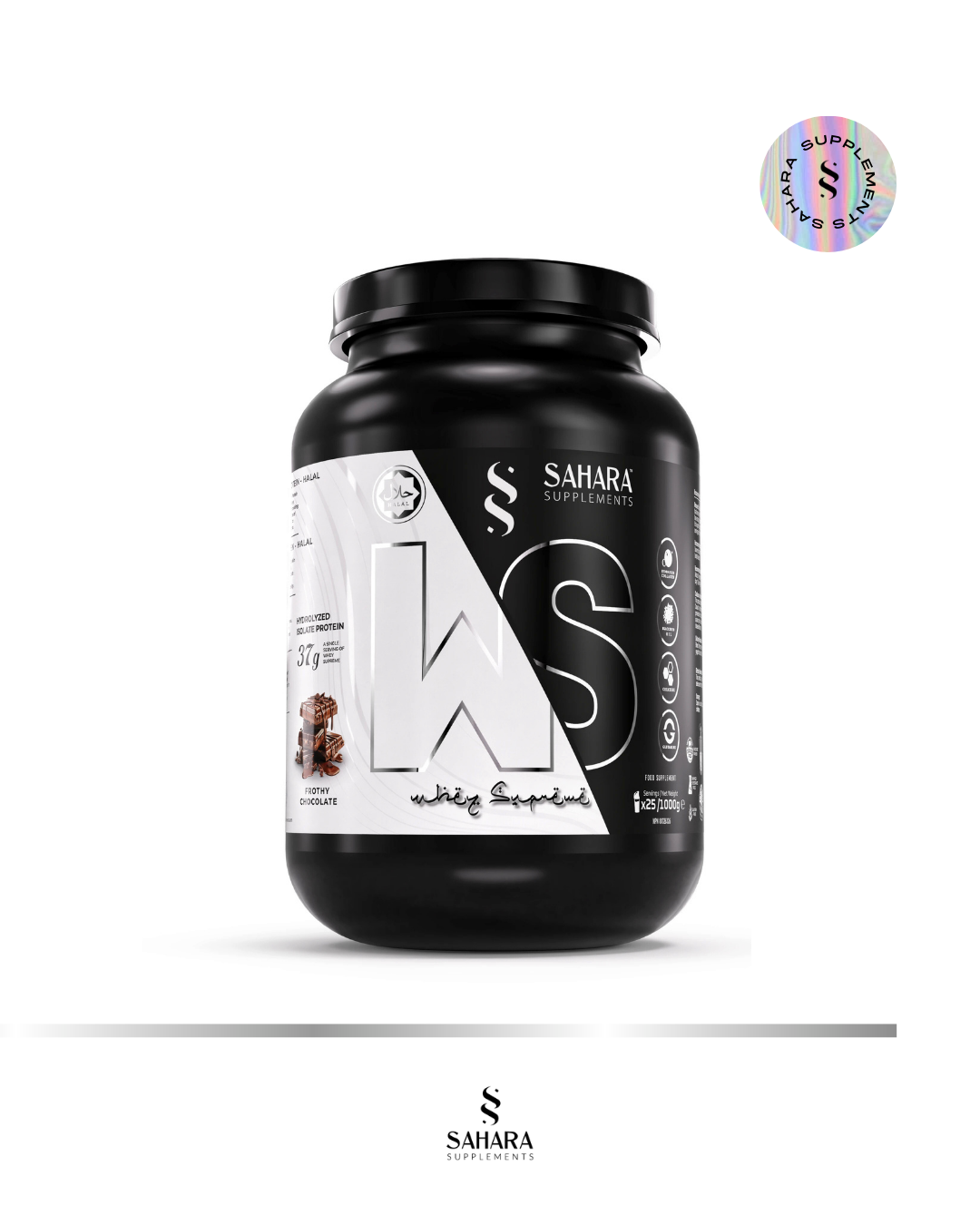
Whey Supreme is built as an everyday performance product, meant to be used consistently, not occasionally.
And when you build within a licensing-oriented mindset, you think differently about formulation and claims:
Hydrolyzed whey protein: where quality and consistency start with specifications, sourcing, and repeatable manufacturing.
Hydrolyzed bovine collagen: a category where consumers increasingly look for clarity on sourcing and quality standards.
Creatine monohydrate: a mainstream performance ingredient that benefits from clear dosing and quality controls, often a practical consumer concern under the broader umbrella of creatine safety.
Glutamine and black seed oil: ingredients that require the same discipline: defined sourcing, consistent specifications, and responsible claims.
This is also where third-party verification fits. Health Canada licensing and NPNs are one layer of trust. Third-party tested supplements, when done properly, can add another layer of reassurance, particularly for consumers who care about contamination controls and global credibility.
The point isn’t to overwhelm customers with acronyms. The point is to make standards legible.
In wellness, trust is rarely built by one claim. It’s built by a pattern:
the standards you choose
the systems you operate under
the clarity you provide when customers ask “what does this mean?”
A brand optimized for the long term will prefer a system that is:
repeatable
explainable
verifiable
compatible with global expectations
That’s the logic behind choosing Health Canada’s path, and it’s the same logic behind how we think about consistency more broadly.
Even subscription, when mentioned at all, is meant to reflect that mindset: not a promotion, not a perk, simply a structure that supports consistent routines and long-term thinking.
Health Canada’s NPN system is not a superficial badge. It’s a consumer-visible signal tied to a pre-market licensing framework, one designed to improve clarity around safety, quality, and appropriate use.
Sahara chose that harder path deliberately because we believe standards matter most when they’re consistent, and when they can be explained without hype.
Health Canada licensing is one part of Sahara’s broader quality framework, alongside third-party testing, Informed Choice certification, Halal certification through ISNA, and sourcing standards designed for consistency and global credibility.
If you want to understand how Sahara applies these standards in practice, explore Whey Supreme and our approach to consistency and verification.

