Cart
0
You may also like







Most people don’t struggle in Ramadan because fasting is “too hard.”
They struggle because their Suhoor doesn’t support the fast.
When Suhoor is rushed, low in protein, built on quick carbs, or paired with dehydrating choices, the day tends to follow a predictable pattern:
a mid-morning energy crash
headaches or irritability
cravings that build toward iftar
training that feels harder (or stops entirely)
digestion that feels unpredictable
And that can turn Ramadan into endurance—when what we want is presence: steady energy for work, family, and worship.
The good news is that Suhoor is one of the highest-leverage decisions you make all month. You don’t need a perfect diet. You need a repeatable system.
This guide will walk you through a calm, practical Suhoor framework built around:
protein-first structure
low digestive load
stable energy
hydration that actually holds
repeatability (so you can do it daily)
This same framework is the foundation of Sahara’s Suhoor guide, designed specifically for fasting readiness.

During Ramadan, you’re asking your body to perform inside a compressed fueling window. As fasting hours progress, the body shifts its energy use and adapts—something well documented in nutrition science.
What many people experience as “Ramadan fatigue” is often not fasting itself, but nutritional insufficiency inside that restricted window: too little protein, too many fast carbs, too much meal volume, too little hydration planning.
Public health guidance around Ramadan consistently points to the same fundamentals:
build balanced meals
avoid overly salty and overly sugary choices (they worsen thirst and crashes)
hydrate consistently between iftar and Suhoor
Suhoor isn’t about eating “more.”
It’s about eating with function.
A high-performing Suhoor usually does five things well:
Protein-first (to support lean tissue and recovery)
Low digestive load (so you don’t feel heavy, bloated, or thirsty)
Stable energy (slow-release fuel, not spikes)
Hydration-conscious (so thirst isn’t the main struggle)
Repeatable (so it becomes a habit, not a project)
These are the exact principles outlined in Sahara’s Ramadan fasting nutrition guide.
Let’s break them down.

Protein is the quiet backbone of Suhoor.
In prolonged daily fasting, amino acids are still needed for essential processes. If your pre-fast intake is inadequate, breakdown can exceed synthesis over time—especially if you train, work long hours, or sleep less than usual.
Practical Suhoor target:
Aim to include a high-quality protein anchor at Suhoor—something you digest well and can repeat consistently.
Then build the rest of the meal around it.
A common mistake is trying to “eat huge so it lasts.”
But large, heavy meals—especially fried or very sugary foods—can lead to:
sluggishness
thirst (often worsened by salty foods)
discomfort that distracts you during the day
That’s why Sahara’s guide emphasizes shifting from volume-based eating to nutrient density and absorption efficiency.
Low digestive load doesn’t mean “small.”
It means tolerable.
Stable energy comes from structure, not “more calories.”
A steady Suhoor usually includes:
slow carbs (oats, legumes, fruit, whole grains)
healthy fats (nuts, seeds, olive oil, avocado)
fiber (berries, chia/flax, vegetables if tolerated)
protein as the anchor
Mainstream Ramadan nutrition guidance repeatedly recommends balanced Suhoor choices and minimizing overly salty/sugary foods for better energy and thirst control.

Many people underestimate how much “Ramadan fatigue” is actually hydration management.
What tends to backfire:
drinking too little at Suhoor
pushing caffeine too late in the night
eating very salty foods before fasting
under-replacing fluids after training
A better approach:
spread fluids between iftar and Suhoor
keep Suhoor foods supportive (not dehydrating)
if you sweat a lot, consider electrolytes as part of your routine (especially if training)
This aligns with common public Ramadan guidance to distribute fluids in the non-fasting window and avoid choices that increase thirst.
The perfect plan that you can’t repeat is not a plan.
Repeatability is one of the core Suhoor principles in Sahara’s guide for a reason: it supports daily adherence under real-life constraints.
Most people don’t need 30 recipes.
They need 2–4 reliable templates they can rotate without thinking.
If you want one structure that works for most adults, start here:
Protein anchor
Slow energy carb
Healthy fat
Hydration plan (water first; caffeine only if it doesn’t disrupt you)
Then adjust for your tolerance and schedule.
If you have diabetes, kidney disease, pregnancy, GI conditions, or a medical history where fasting is complex, use this as general education and speak with your clinician about what’s appropriate for you.
Suhoor isn’t only “extra eating.” It’s part of the wisdom of the fast—support that makes worship easier and steadier.
The Prophet ﷺ encouraged Suhoor and spoke about barakah in it.
Make the intention that your Suhoor supports your day of worship—seeking strength for salah, Qur’an, service, work, and family, with tawakkul upon Allah عَزَّ وَجَلَّ.
Food comes first. Supplements are tools.
In Ramadan, the value of a supplement is often not “more”—it’s less friction:
fewer steps
fewer decisions
easier consistency inside a short window
Sahara’s guide explains why hydrolyzed proteins can be especially relevant during Suhoor: they’re pre-digested into smaller peptide chains, which can reduce digestive workload and support faster absorption—useful when the feeding window is short and tolerance can be lower.
The guide also explains why consolidating multiple functional nutrients into one approach can reduce preparation complexity and the risk of inconsistent intake.
That’s the lens to use in Ramadan: consistency tools, not shortcuts.
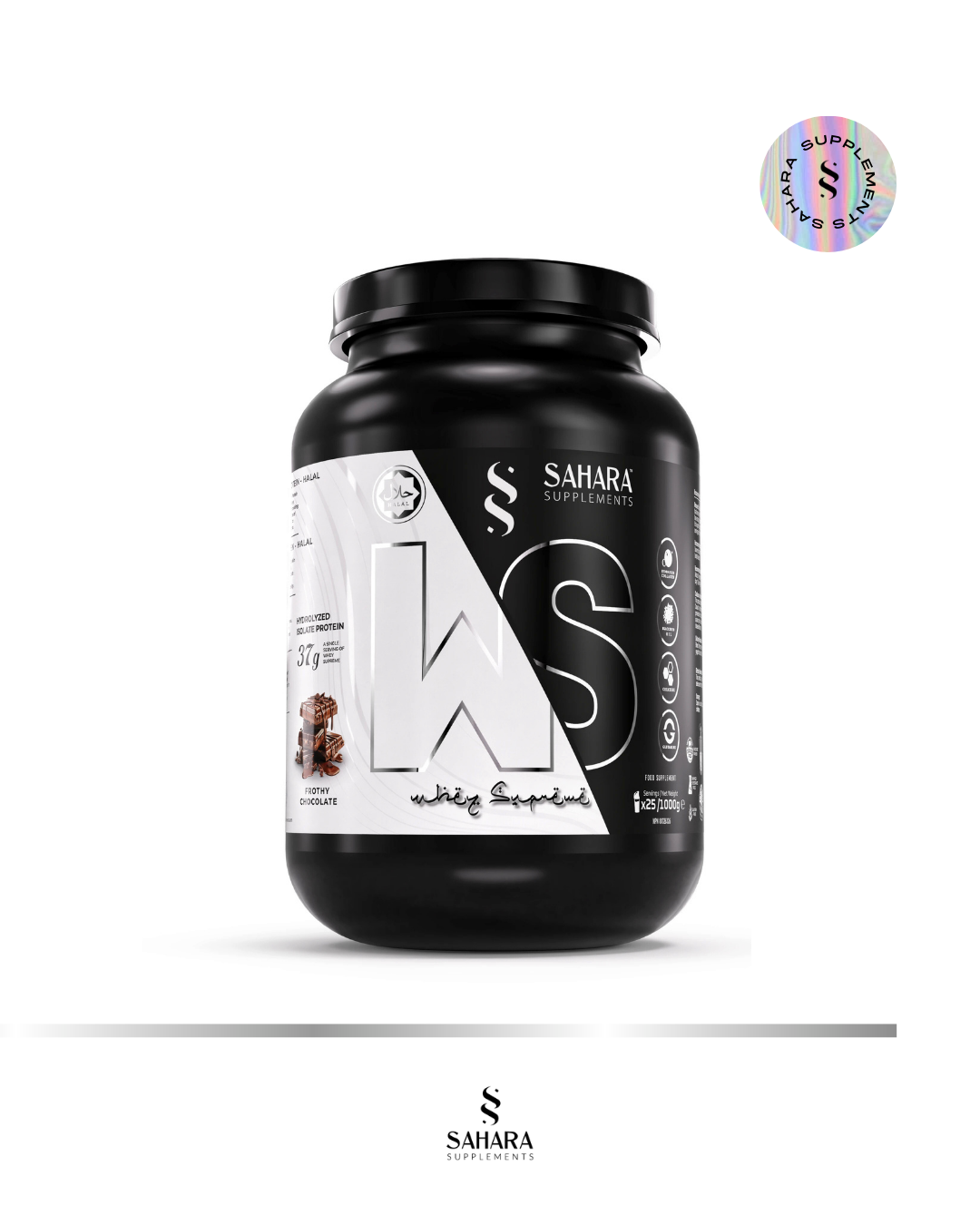
Sahara designed Whey Supreme as a high-performance, halal-certified daily protein that combines:
Hydrolyzed isolate whey protein
Hydrolyzed bovine collagen (Type I & III)
Creatine monohydrate
L-glutamine
Black seed oil extract
The point is not “more ingredients.”
It’s functional overlap and adherence during Ramadan—supporting lean tissue, gut integrity, energy systems, and recovery in one consistent routine.
Whey Supreme is positioned with verification signals many people actively look for—halal certification, banned substance testing, third-party testing, and Health Canada approval/compliant manufacturing—plus 36–37g protein per serving.
If you already have a solid Suhoor and you’re consistent: great.
If you struggle with consistency: reduce friction.

If you want plug-and-play Suhoor options built around this exact framework—protein-first, hydration-smart, low digestive load, repeatable routines—download the free Suhoor guide.
Download the Suhoor Recipe Guide
A balanced Suhoor built around protein + slow energy carbs + hydration planning tends to support steadier energy than quick carbs alone.
Common causes are a low-protein Suhoor, overreliance on quick carbs, dehydration, or too much caffeine/salty food increasing thirst. Balanced structure usually helps.
Many people can, with adjusted intensity and timing. Athletic performance research around Ramadan emphasizes the importance of nutrition planning and recovery inside the feeding window.
Often it’s meal size, food type (fried/sugary), or low tolerance choices. Lower digestive load meals can help.
Ramadan success is rarely about extreme discipline.
It’s about building a system you can repeat.
When Suhoor is designed correctly, your day tends to feel:
steadier
calmer
more focused
less reactive
more consistent in worship and work
If you want the simplest next step, download the Suhoor guide and use it as your baseline for the month.
Download the Suhoor Recipe Guide
And if you want to see how Sahara applies these principles in practice, explore Whey Supreme and our approach to consistency.
